Learning
Upper and lower case letter match
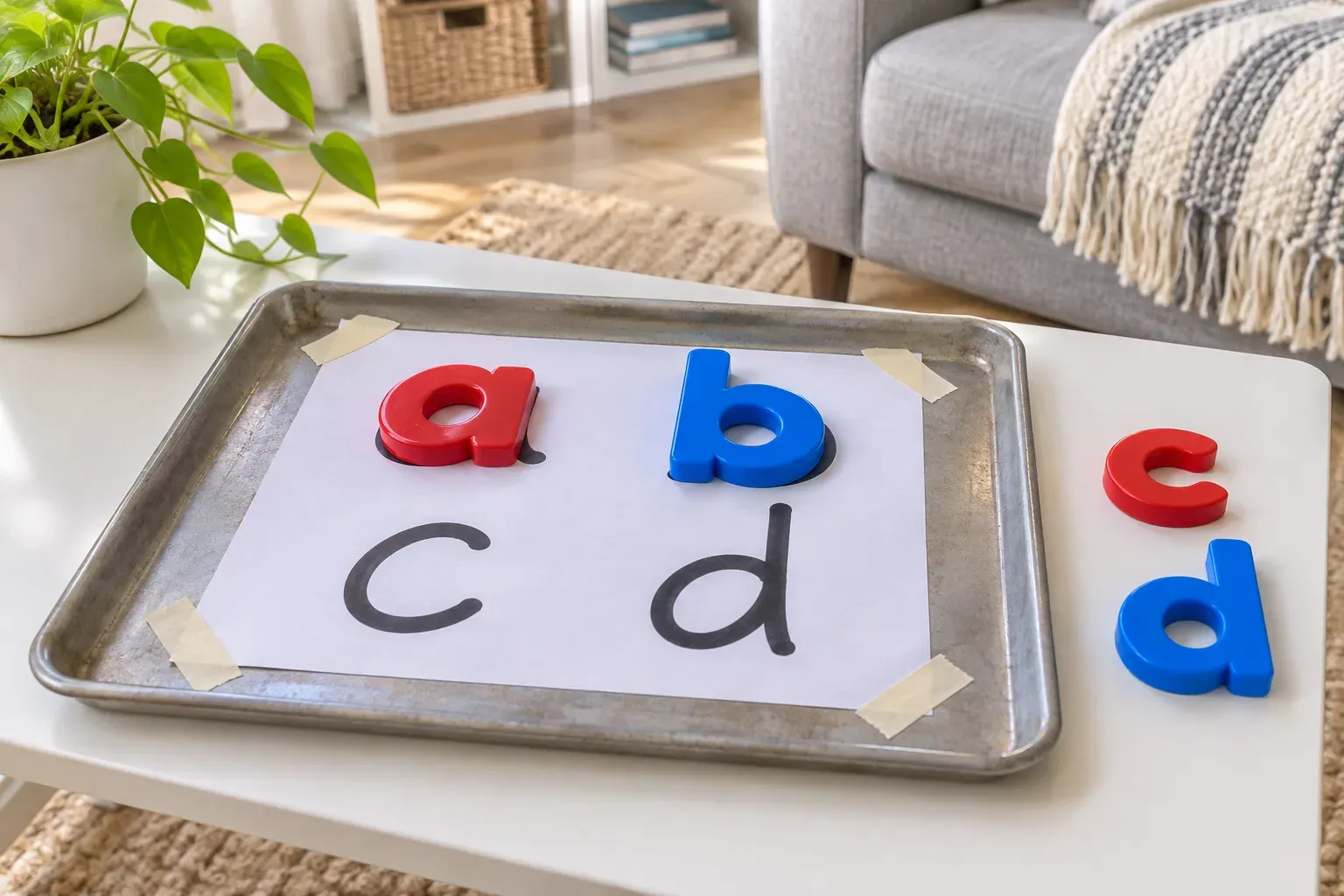
Match capital magnetic letters to their lower-case partners written on paper taped to a metal baking tray.
- Age
- 2.5 to 5 years
- Play time
- 10 min
- Set-up
- 3 min prep
- Where
- Indoors
- Who
- One child
- Clean-up
- Low mess
Capitals and small letters look nothing alike for half the alphabet, which is a bit unfair on a three-year-old. Matching them a few at a time, starting with the letters of their own name, makes it manageable, and the click of a magnet landing on the tray is a small reward each time. It takes ten minutes at most and suits the kitchen table before tea. Stop while they are still getting them right.
How to play
-
Pick four or five letters to begin with, such as those in your child's name, and find the matching capital magnets.
-
Write the lower-case versions on a sheet of paper, large and well spaced out.
-
Tape the paper flat to a metal baking tray so the magnets will hold through it.
-
Hand your child one capital magnet at a time and name the letter. Ask them to find its partner on the paper and place the magnet on top.
-
If they are unsure, point out two possible letters to choose between.
-
Swap in a new sheet with different letters once those are easy.
What you need
Don't have it?
- No magnetic letters? Write the capitals on sticky notes or squares of card and match those to the paper instead.
- No metal baking tray? The fridge door or a biscuit tin lid holds magnets, with the paper taped on.
Stay close
Check magnetic letters for loose magnets.
What they are practising
- language. Hearing a letter named while pairing its capital with its lower-case form links one name to two shapes.
- problem solving. Your child studies the capital in their hand and checks it against each written letter to find the partner.
Make it easier
Begin with letters whose capital and small forms look alike, such as O, S, C and X, and offer just two partners to choose between.
Make it harder
Put out eight or ten letters at once for a five-year-old, include easily confused pairs such as b and d, and ask for each letter's sound as it lands.
Parents ask
- What does checking for loose magnets actually involve?
- Turn each letter over and press the little magnet in the back. If it wobbles, is cracked or has fallen out, throw that letter away, because swallowed magnets are dangerous.
- The magnets slide about or drop off. Why?
- Some baking trays are aluminium, which magnets ignore. Test yours first, and use a single sheet of thin paper so the pull gets through.
- Which letters should come first?
- The ones in your child's name, since they have the most reason to care about them. After that, add a couple at a time and keep one or two old favourites on every sheet.
Find more like this
2 year olds3 year olds4 year olds5 year oldsIndoors10 minutes or lessLow messLearningWith tapeWith paper