Learning
Tell-and-draw story book
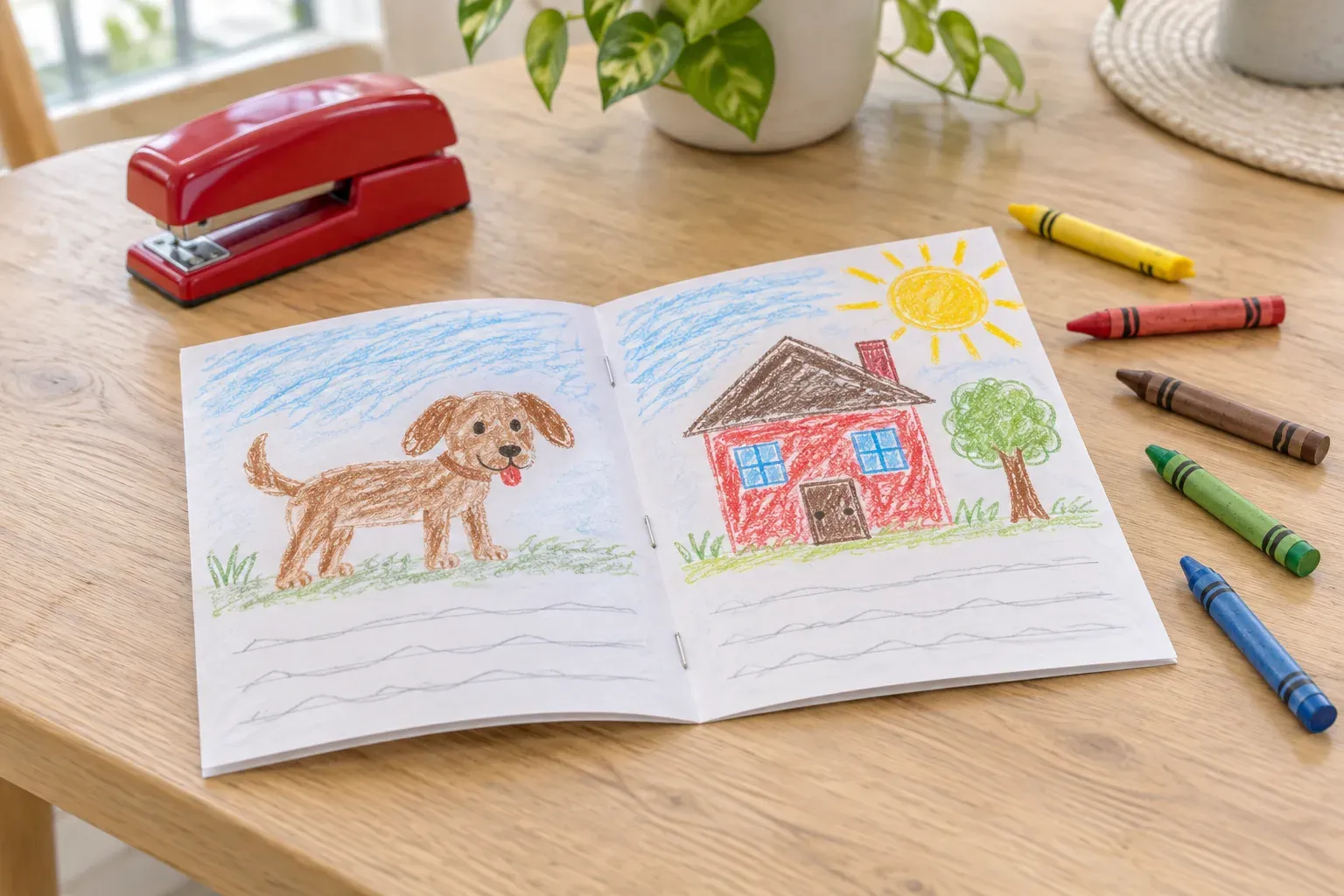
Fold and staple a blank booklet, write down a story as your child tells it, then they illustrate every page.
- Age
- 4 to 6 years
- Play time
- 40 min
- Set-up
- 5 min prep
- Where
- Indoors
- Who
- One child
- Clean-up
- Low mess
Four-year-olds are full of stories but cannot yet write them, so you become the scribe and they stay the author. Plots wander, characters vanish halfway through, and the ending is often 'and then they went home', which is fine. It makes a calm afternoon job, or a slow one spread over a week at a page a day. The finished book tends to be requested at bedtime far more than anything from the shop.
Wool is yarn in the US.
How to play
-
Stack three or four sheets of A4 paper, fold them in half together to make a booklet, and put two staples through the fold. Keep the stapler with you.
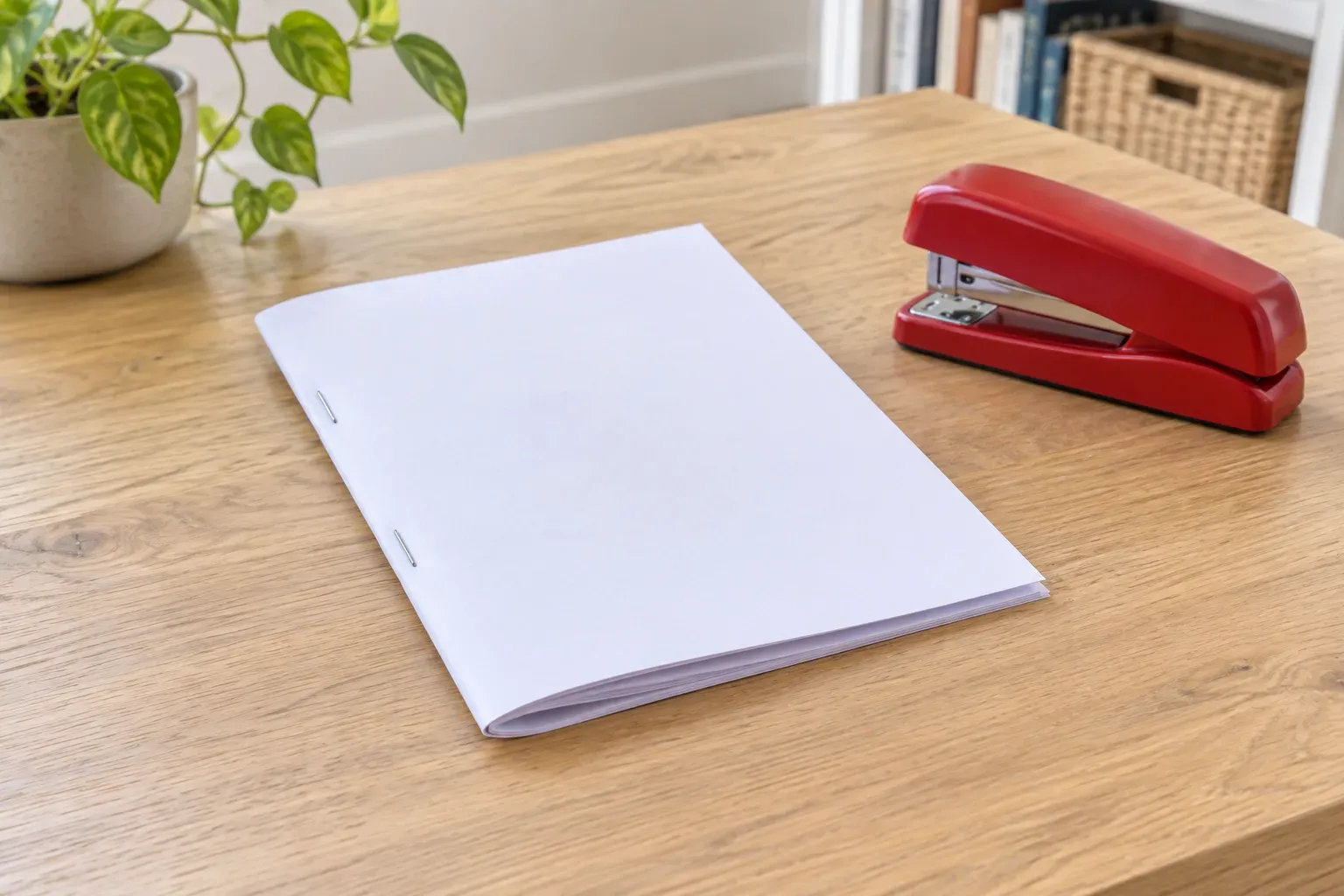
Fold the sheets together and staple along the crease -
Ask your child who the story is about, and what happens first.
-
Write their words at the bottom of the first page exactly as they say them, a sentence or two per page, then turn over. Keep going until the story ends or the pages run out.
-
Read the whole thing back, then hand over the crayons so they can draw a picture above the words on every page.
-
Finish with a title on the cover and their name as author and illustrator.
-
For a confident five- or six-year-old, let them copy one word per page themselves or write the title.
What you need
- three or four sheets of A4 paper
- stapler
- pencils, crayons or felt tips
- pen for you
Don't have it?
- No stapler? Punch two holes along the fold and tie the pages with wool.
- No A4 paper? The backs of old drawings or brown paper bags cut flat fold up just as well.
Stay close
The stapler is an adult job; press the staples flat on the inside so no points stick out.
What they are practising
- language. Telling a story out loud, one page at a time, means thinking about what comes next and how to say it.
- creativity. They invent the characters, the trouble and the ending, then decide what each picture shows.
- fine motor. Drawing in the space above the words, and copying a letter or two, take a controlled pencil grip.
Make it easier
For a four-year-old who stalls, offer an opening line such as 'One morning a dog found a door', then ask one question per page about what happened next.
Make it harder
A six-year-old can plan the pages first with a quick sketch on each, write some of the words themselves and add speech bubbles.
Parents ask
- Should I correct the grammar when I write it down?
- Write it exactly as they said it. Hearing their own words read back is the whole charm, and the book becomes a record of how they talked at that age.
- What if they want to draw first and tell the story after?
- Go with it. Let them draw on each page, then ask what is happening in each picture and write down the answers.
- How do I keep the books?
- Date the back cover and keep them in a folder or a shoebox. They take a minute to read and get funnier every year.