Learning
Picture dice storytelling
Roll a picture cube and make up a story, with each player adding the next bit.
- Age
- 3.5 to 6 years
- Play time
- 15 min
- Set-up
- 10 min prep
- Where
- Indoors
- Who
- Any number of kids
- Clean-up
- Low mess
Stories made this way are gloriously daft. A dog sails a cake to a castle, somebody adds a volcano that was never on the cube, and the plot collapses in giggles. Younger players tend to describe the picture and stop, so a gentle and then keeps things moving. Try it at the table after dinner or on a rainy Sunday. The first story will be about four sentences long, and they get longer with practice.
Shop-bought versions are known as story dice or story cubes.
How to play
-
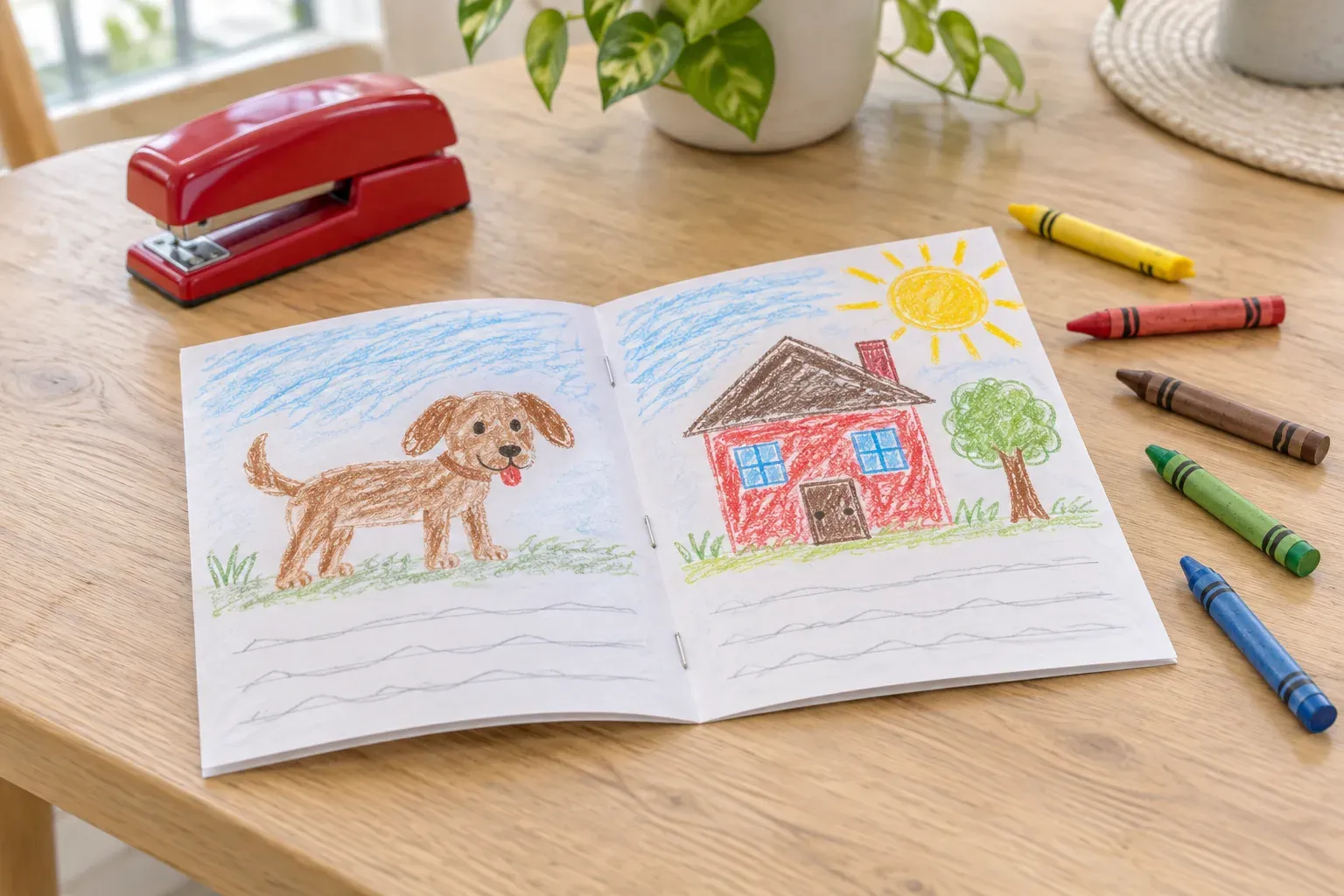
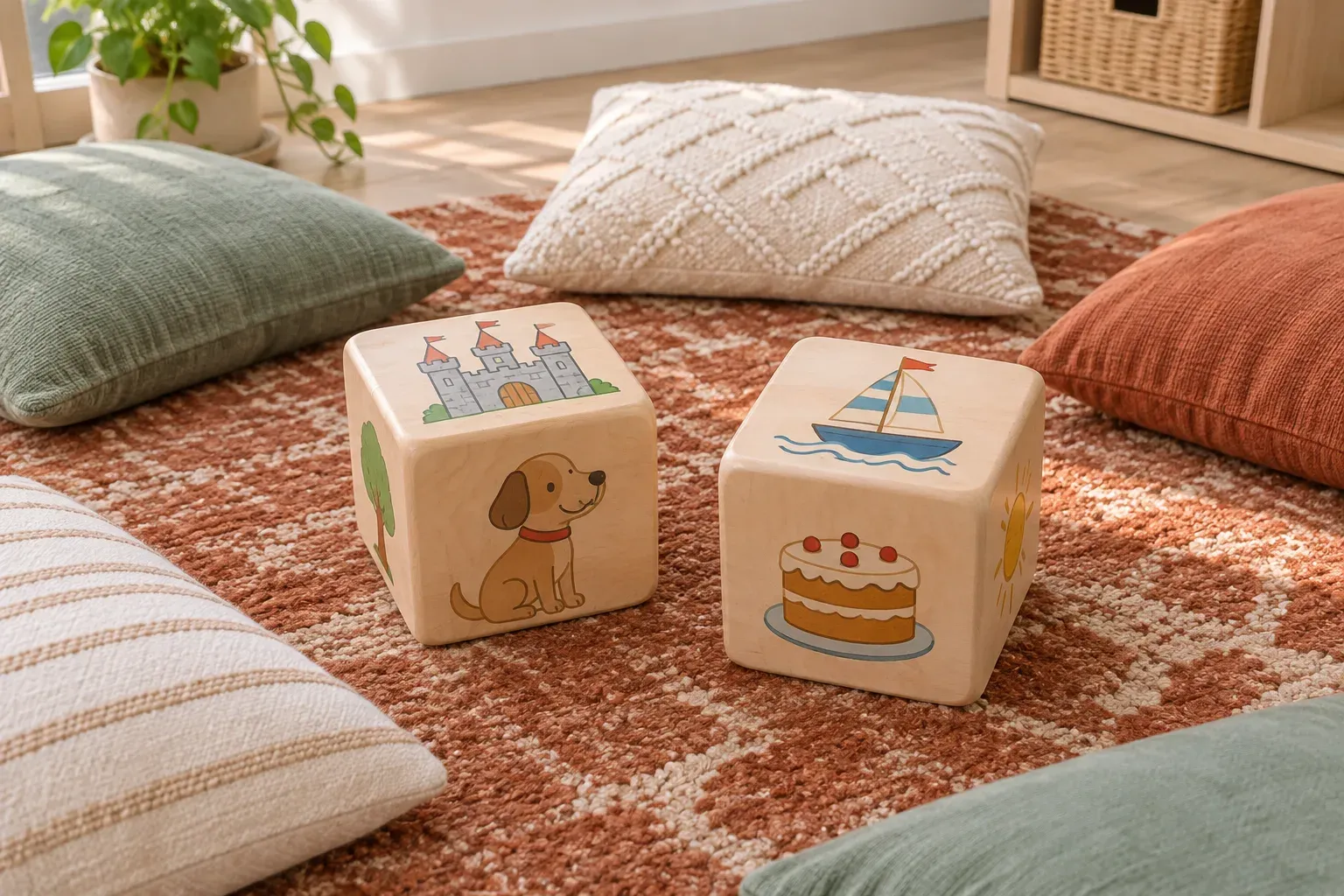
Draw a simple picture or put a sticker on each face of a wooden cube or small box. Mix characters, places and things, such as a dog, a castle, a boat and a cake.
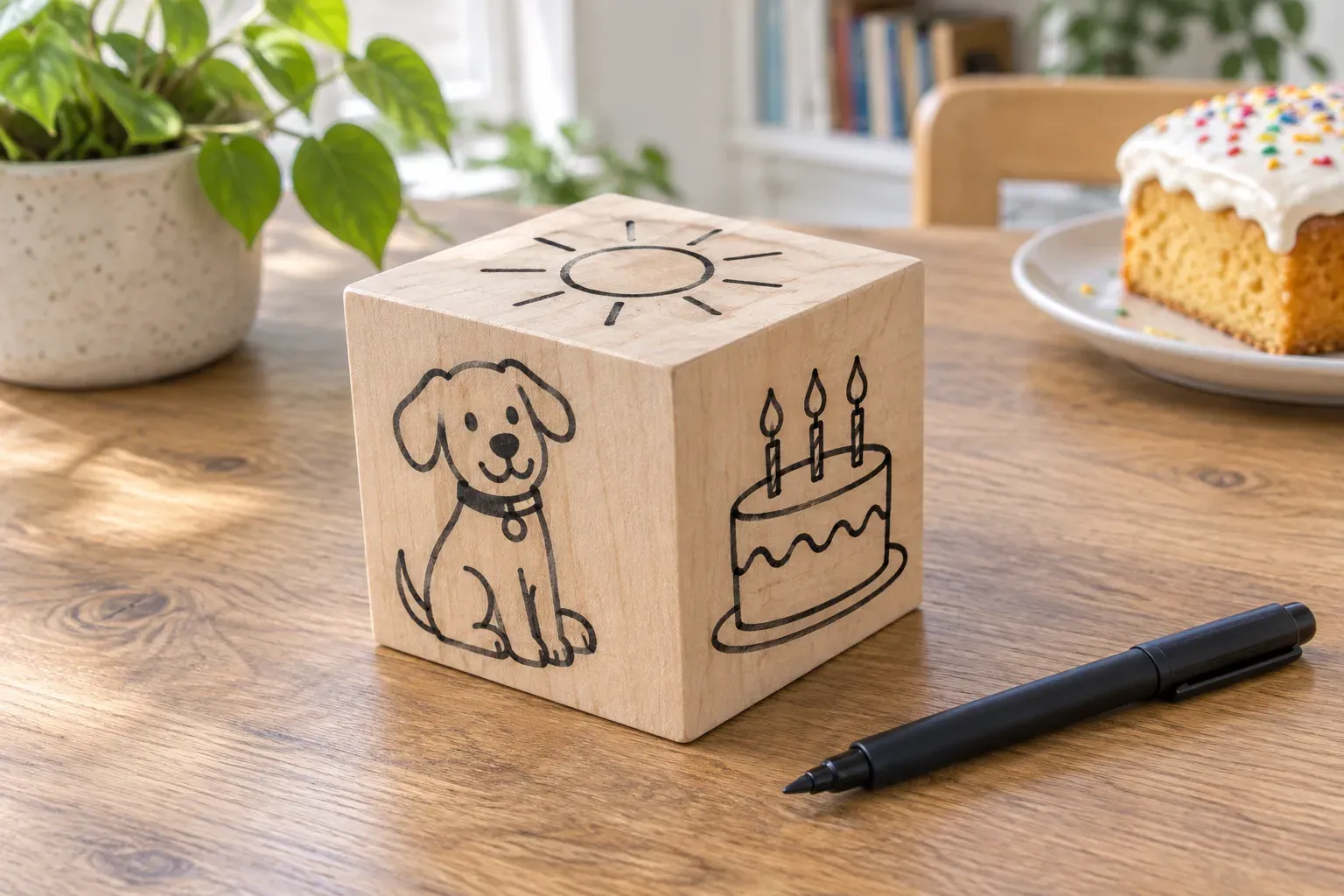
Simple outlines are all a story cube needs -
Make a second cube with different pictures if you have one.
-
Sit in a circle. The first player rolls and starts a story about the picture that lands face up.
-
The next player rolls and adds the next bit, working the new picture in.
-
Help younger children with a prompt such as and then what happened.
-
After a few rounds, the next person to roll gives the story an ending.
What you need
Don't have it?
- No wooden cubes? Draw six pictures on cards, shuffle them face down and turn one over each turn, with no rolling needed.
- No stickers? Simple drawings in pen are fine, and children like recognising your wobbly castle.
What they are practising
- language. Putting a picture into a sentence that follows on from the last one means choosing words and linking ideas aloud.
- creativity. Fitting a cake or a castle into a story that was about something else calls for an invented reason on the spot.
- turn taking. Each player listens to the others' parts and waits for the cube before adding their own.
Make it easier
Use one cube and take the first turn yourself so there is a story to add to. A single sentence per roll is plenty.
Make it harder
Roll two cubes at once and ask for both pictures to appear in the same part of the story. A six-year-old can also be given the ending in advance and asked to steer towards it.
Parents ask
- My child freezes when it is their turn. How do I help?
- Ask a small question about the picture: where is the boat going, who is on it. Their answer is their bit of the story.
- What if one child takes over and will not stop?
- Agree a rule before you start, such as two sentences and then pass the cube. Holding the cube is the signal for whose turn it is.
- Can we write the stories down?
- Yes, and children love hearing their own story read back. Jot it down as you go or record it on your phone.
Find more like this
3 year olds4 year olds5 year oldsIndoorsLow messLearningWith a cardboard boxWith stickers