Learning
Roll and tally chart
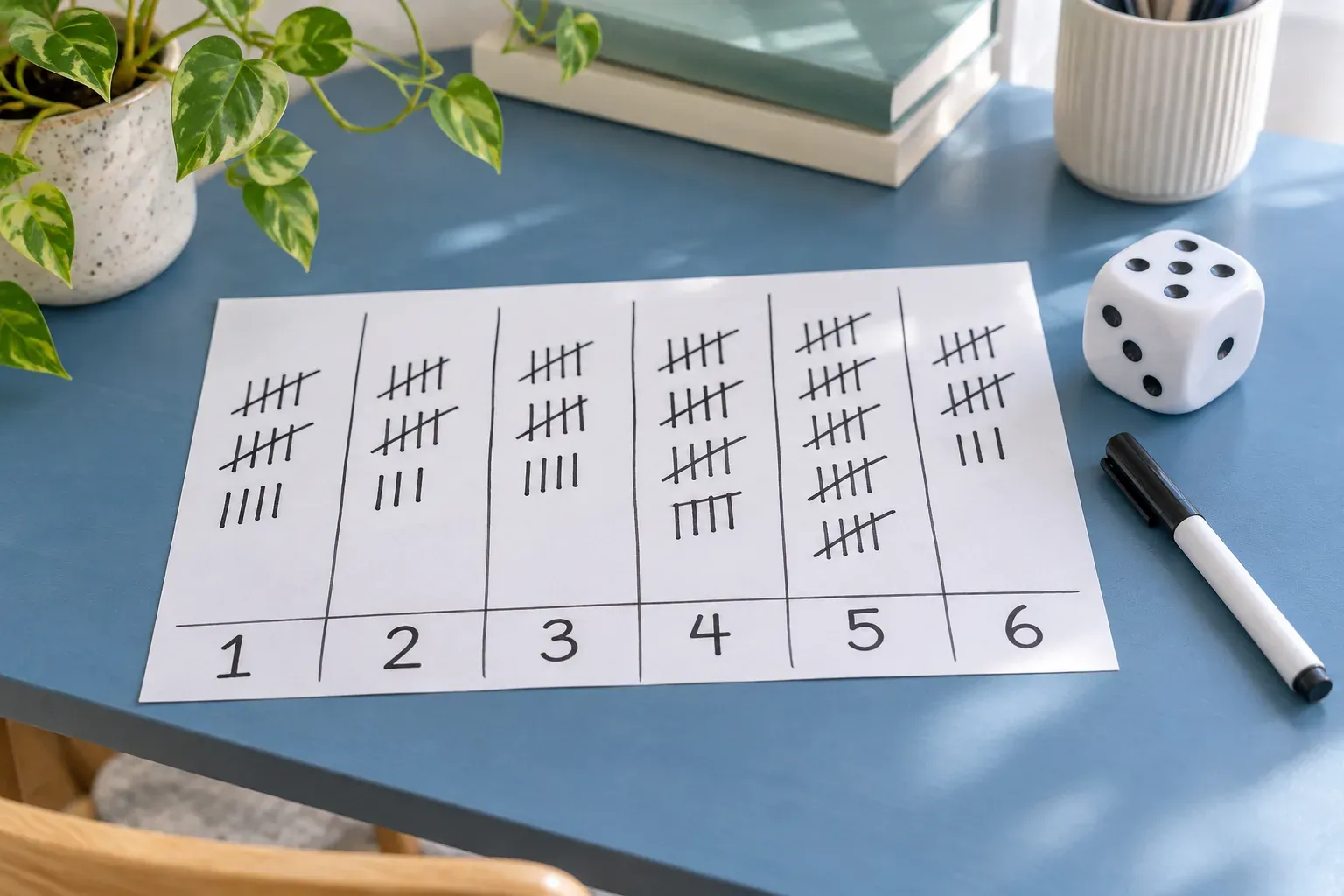
Roll a die, count the dots, and add a tally mark to the matching column until one column wins.
- Age
- 3.5 to 6 years
- Play time
- 15 min
- Set-up
- 3 min prep
- Where
- Indoors
- Who
- Any number of kids
- Clean-up
- Low mess
It is a race in which the runners are numbers, and children pick a favourite almost at once. Come on, four. The rolling is the attraction, the counting of dots happens along the way, and the page slowly fills with a wobbly chart. Good for a quiet spell at the table with one child or two. The die will leave the table repeatedly, so roll it inside a box lid, and expect a small sulk if the favourite comes last.
How to play
-
Draw six columns on a sheet of paper and write the numbers 1 to 6 along the bottom, one under each column.
-
Show your child how to make a tally mark: one short line in the column, starting at the bottom and working up.
-
Let them roll the die and count the dots on top. Help them find the matching column and add a mark.
-
Keep rolling and marking. Every so often, stop to look at which column is ahead.
-
Stop when one column reaches the top of the page. Count the marks in each column and talk about which number won and which came last.
-
For an older child, show how to bundle tallies in fives with a line across the fifth mark.

Bundles of five make the counting quicker
What you need
- die
- paper
- marker
Don't have it?
- No die? Write 1 to 6 on scraps of paper, fold them into a cup and draw one out each turn, putting it back afterwards.
- No marker? Stickers or a crayon line in the column do the same job as a tally mark.
Stay close
Dice are a choking risk for under threes.
What they are practising
- counting. Counting the dots on each roll and then the marks in each column gives repeated practice from one to six and beyond.
- turn taking. Passing the die after each roll and waiting to see what the other person gets keeps the game shared.
- problem solving. Comparing the columns to see which number is ahead, which is last and by how many means reading the chart they have made.
Make it easier
Draw only three columns and cover the die's faces with stickers showing one, two and three dots, each twice. Count the dots together by touching each one.
Make it harder
Roll two dice and tally the totals from 2 to 12, then talk about why seven keeps winning. Bundle the marks in fives and count the final scores in fives.
Parents ask
- Is a die safe with a younger sibling about?
- A standard die is small enough to choke on, so keep it off the floor and away from under-threes. A big foam die solves the problem if a toddler wants to join in.
- My child guesses the dots instead of counting. Should I stop them?
- If the guess is right, they are recognising the pattern, which is a good thing. If it is wrong, touch each dot and count together.
- How do two children share one chart?
- Take turns rolling, with each child marking their own roll. They can each back a number to win and cheer for it.
Find more like this
3 year olds4 year olds5 year oldsIndoorsLow messLearningWith paper