Learning
Paper plate letter puzzles
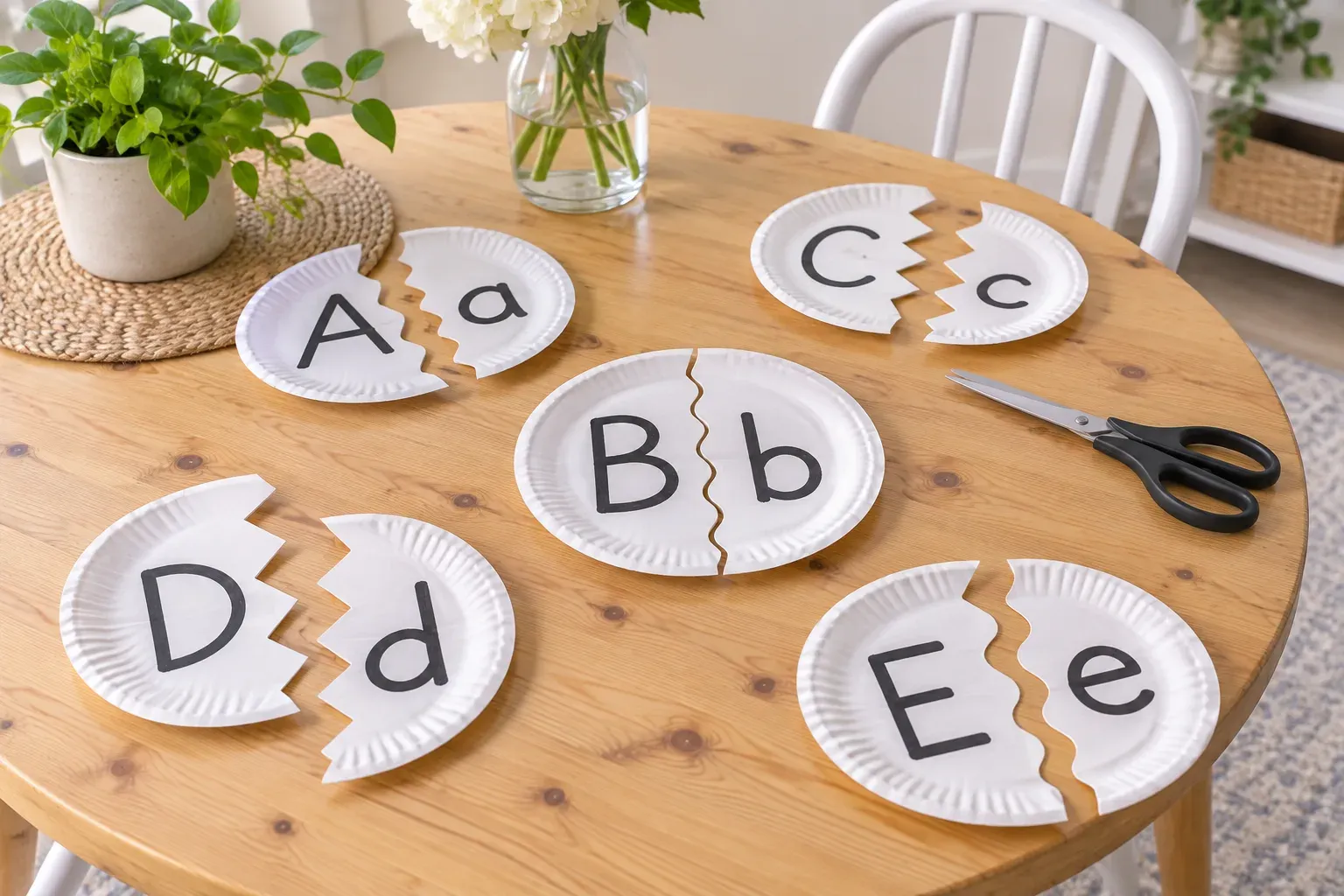
Cut letter-marked paper plates in half with wiggly lines, shuffle the halves, and match them back up.
- Age
- 3 to 6 years
- Play time
- 15 min
- Set-up
- 10 min prep
- Where
- Indoors
- Who
- One child
- Clean-up
- Low mess
Ten minutes with a marker and scissors gets you a puzzle your child has not seen before, which is half the appeal. The wiggly cuts do the checking for you: wrong halves simply do not fit, so nobody has to be told they are wrong. Bring it out at the table while dinner cooks. Younger children match by the shape of the cut long before they look at the letter, and that still counts.
How to play
-
Choose four to six letters your child is getting to know.
-
Write one letter on the left side of a paper plate and the same letter on the right. For older children write a capital on one side and its lower-case partner on the other.
-
Cut each plate in half between the letters, using a different wiggly or zigzag line for each plate so only the right halves fit together.
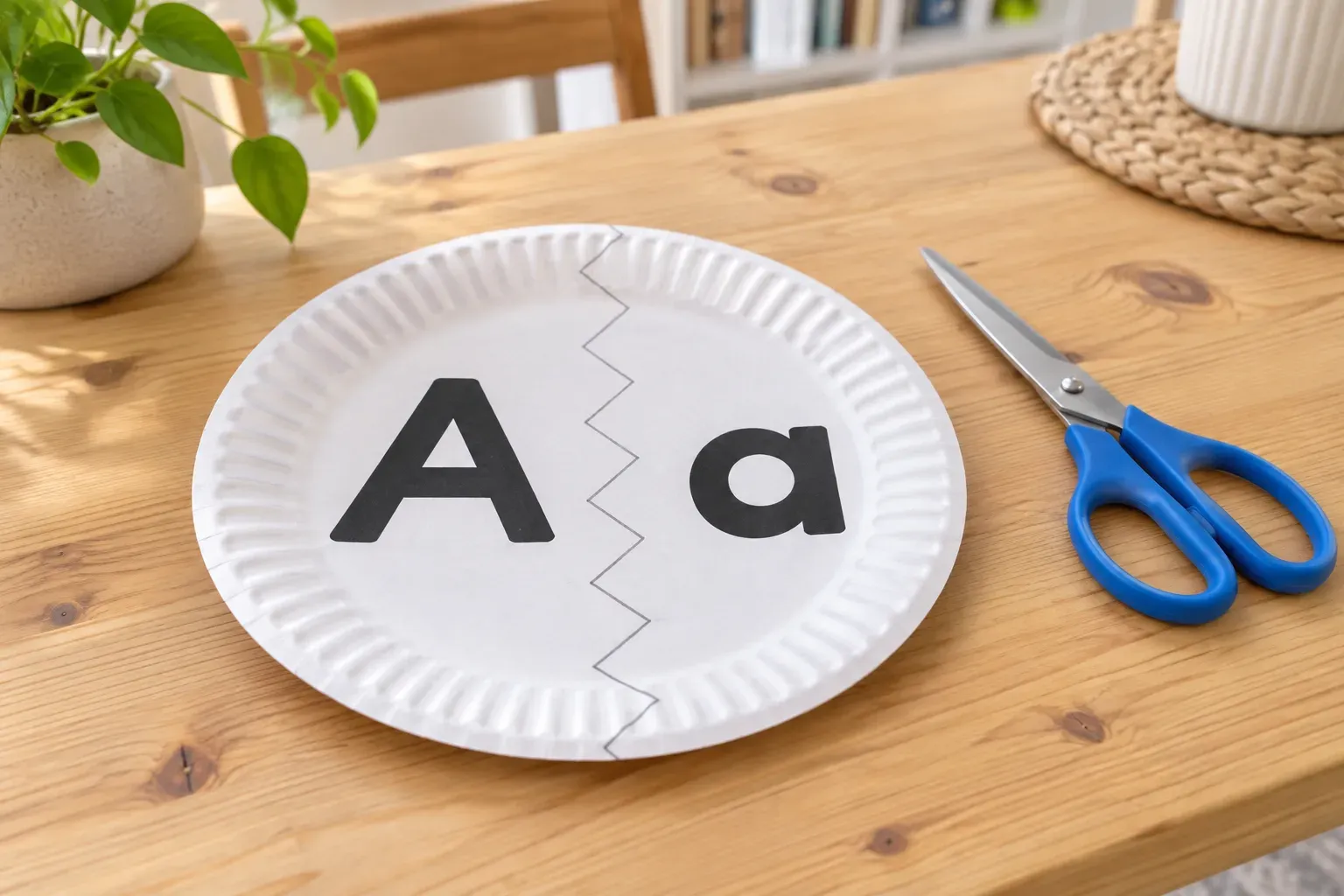
Give every plate a different cut line -
Shuffle the halves and spread them out on the table.
-
Ask your child to find the two halves that match and push them together to check the fit.
-
Say each letter as its plate is completed, and add more plates as the game gets easy.
What you need
- paper plates
- marker
- scissors
Don't have it?
- No paper plates? Circles or rectangles cut from a cereal box work the same way.
What they are practising
- problem solving. Turning and testing halves until the wiggly edges lock together means comparing shapes and ruling out the ones that do not fit.
- language. Saying each letter aloud as its plate is completed connects the written shape with its name or sound.
Make it easier
Start with three plates, using the first letter of your child's name and two that look very different. Make the cuts bold and obviously unlike each other.
Make it harder
Write a capital on one half and its lower-case partner on the other, and make all the cuts similar so the letters have to do the work. Or pair a letter with a drawing of something that starts with it.
Parents ask
- Which letters should I start with?
- The ones in your child's own name, since those matter most to them. Add a few they see often, such as the first letter of a sibling's name.
- Should I say the letter name or the sound?
- Either is fine, and you can say both: this is S, it makes a sss sound. If your child's nursery or school teaches sounds first, follow their lead.
- How do I store them?
- Stack the halves in a zip-lock bag or a big envelope. They last for months unless someone bends them.
Find more like this
3 year olds4 year olds5 year oldsIndoorsLow messLearningWith paper