Learning
Oil and coloured water drops
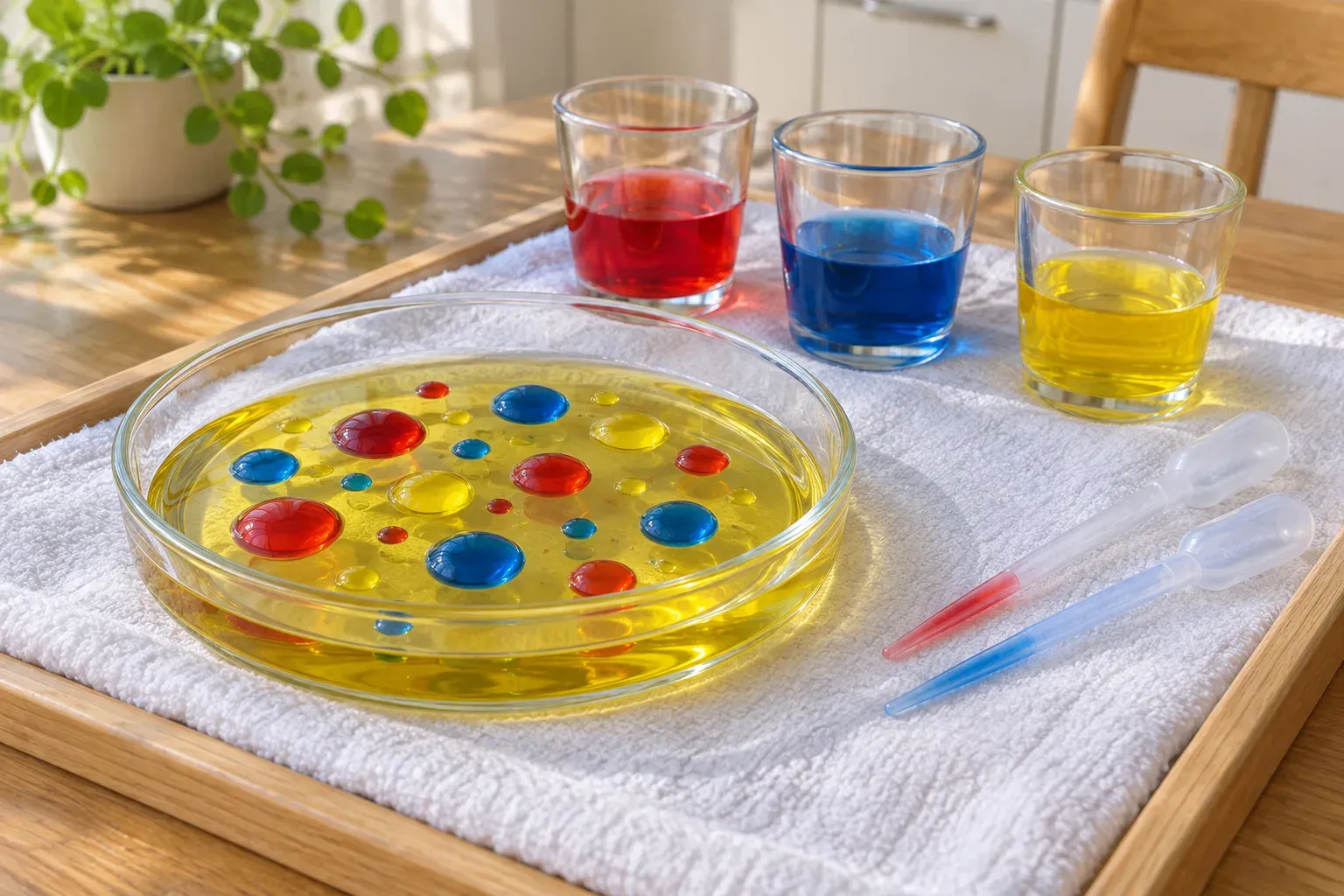
Drip coloured water into a shallow dish of oil and nudge the drops together to see what they do.
- Age
- 2.5 to 6 years
- Play time
- 25 min
- Set-up
- 5 min prep
- Where
- Indoors
- Who
- One child
- Clean-up
- Medium mess
Coloured water dropped into oil does something children do not expect: it refuses to mix and sits there in neat round beads. Most will spend a good while adding drop after drop, then herding the beads together with a spoon. Set it up at the table on a quiet afternoon and stay close. The dish ends up a murky brown and the oil gets onto sleeves, so roll them up first.
How to play
-
Cover the table and put the shallow clear dish on a tray or towel to catch drips.
-
Pour in a layer of oil about a centimetre deep.
-
Mix a few spoonfuls of water with a drop or two of food colouring in separate cups, one cup per colour.
-
Show your child how to pick up a little coloured water with a dropper or teaspoon and drip it into the oil.
-
Let them add drops of each colour and watch them sink and sit as beads in the oil.
-
Give them a clean teaspoon or dropper tip to nudge the drops together and see what happens when two colours meet.
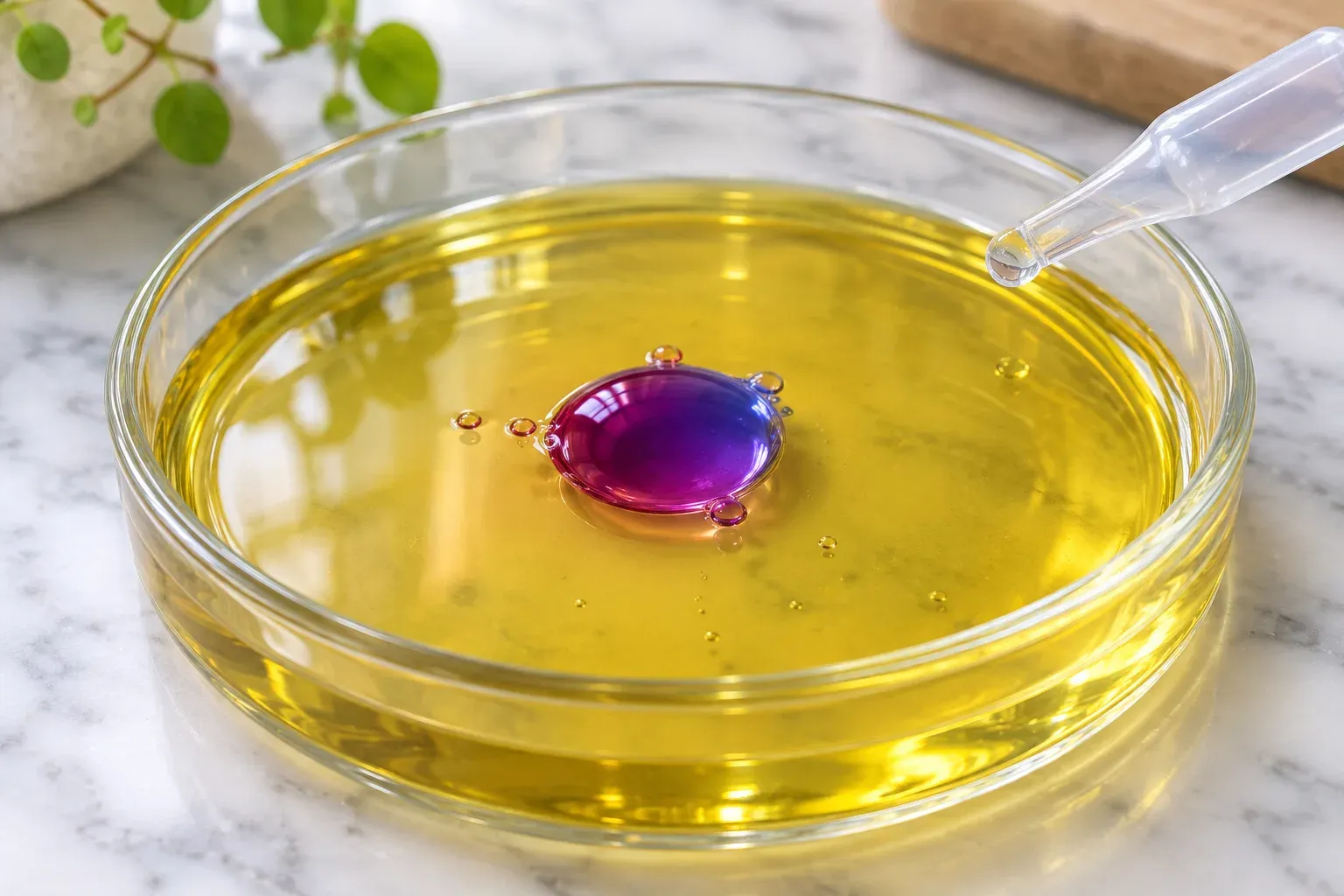
When two drops touch, watch for a new colour -
Wipe up any spilled oil straight away, as it makes the floor slippery.
What you need
- baby oil or cooking oil
- shallow clear dish
- water
- food colouring
- droppers or teaspoons
- small cups
Don't have it?
- No droppers? A teaspoon works, or a drinking straw dipped in and held shut with a finger on top to carry a drop.
- No shallow clear dish? A white plate with a rim or a pale bowl shows the colours nearly as well.
Stay close
Oil is slippery; protect the table and floor.
What they are practising
- fine motor. Squeezing a dropper gently enough to release one drop at a time takes careful pressure from the thumb and fingers.
- colours. Pushing two coloured beads together until they merge shows what blue and yellow or red and blue make.
- problem solving. Working out how to move a bead without breaking it up means trying a nudge, seeing what happens and adjusting.
Make it easier
Give a younger child a teaspoon in place of a dropper and one colour at a time. Dripping and watching is plenty without the nudging.
Make it harder
Ask a six-year-old to predict what will happen when a blue bead touches a yellow one, then test it. They can also try to build the biggest single bead they can without it breaking up.
Parents ask
- How do I get rid of the oil afterwards?
- Soak it up with kitchen paper and put that in the bin, or pour it into an old jar. Do not tip a dishful of oil down the sink.
- What if my child licks a finger?
- Use cooking oil and food colouring, which are both food, for a child who still puts fingers in their mouth. Baby oil is not for swallowing, so save that for older children.
- Why won't the colours mix into the oil?
- Oil and water do not blend, and water is the heavier of the two, so the drops sink and stay as beads. That is a fair explanation to give your child as well.
Find more like this
2 year olds3 year olds4 year olds5 year oldsIndoorsLearningWith cups