Art
Sponge stamp painting
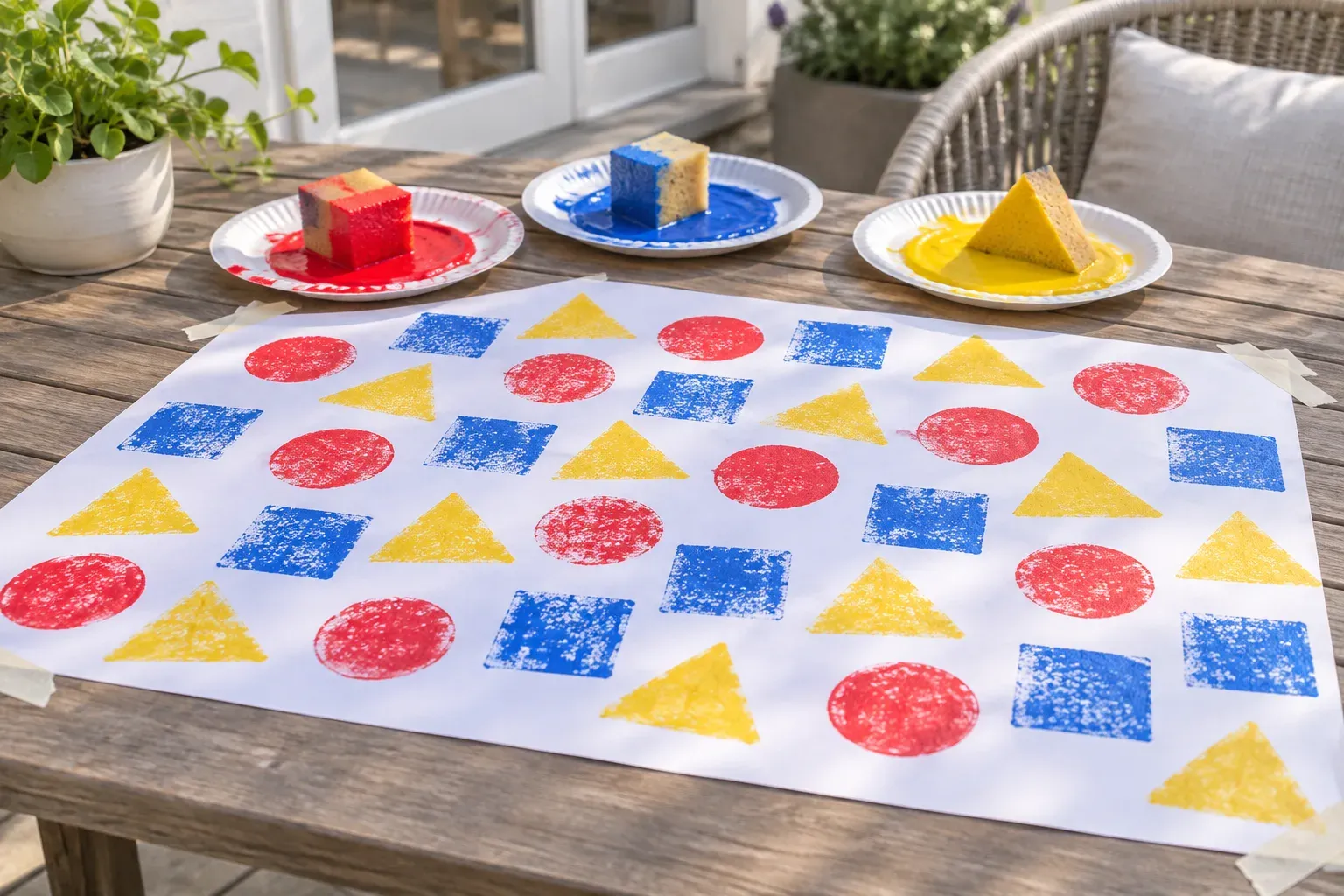
Dip chunky sponge shapes in paint and stamp them across a big sheet of paper to make patterns and pictures.
- Age
- 18 months to 5 years
- Play time
- 15 min
- Set-up
- 5 min prep
- Where
- Indoors or outdoors
- Who
- Any number of kids
- Clean-up
- Medium mess
Brushes are hard work for an eighteen-month-old, but a sponge leaves a satisfying print every time. That reliable result makes stamping a kind first go at painting. The paper fills fast, so tape down a big sheet or have spares ready. You will see far more slapping and smudging than neat shapes from the youngest, and that is the whole point at that age. Four- and five-year-olds start to care where each print lands.
How to play
-
Cut two or three kitchen sponges into big, simple shapes such as a circle, a square and a triangle, each about the size of your palm.
-
Squeeze a puddle of a different washable paint onto each paper plate and spread it thin so a sponge picks up an even coat.
-
Tape down a large sheet of paper, put an old shirt on your child, and show them how to press a sponge into the paint, then flat onto the paper, and lift.
-
Let them stamp freely. Most toddlers smear and slap, which is fine, while older ones start lining the shapes up.
-
For a stretch, start a repeating pattern together, such as circle, square, circle, and see if they can carry it on.
-
Rinse the sponges under the tap until the water runs clear and leave them to dry for next time.
What you need
- kitchen sponges
- scissors
- washable paint
- paper plates
- large paper
- masking tape
- old shirt or smock
Don't have it?
- No sponges? A clean washing-up brush or a scrunched ball of fabric gives a different, textured print.
- No large paper? The plain side of old wrapping paper or a flattened cardboard box works well.
Stay close
Use washable, non-toxic paint, and take a sponge away if a toddler starts biting pieces off it.
What they are practising
- fine motor. Pressing a sponge down and lifting it straight up takes more control than it looks.
- colours. Choosing which plate to dip into gives you both a chance to name each colour as it goes on.
- creativity. A sheet full of stamps can become flowers, trains or rain in whatever story they tell about it.
Make it easier
For an eighteen-month-old, offer one large sponge and one colour, and let them pat it on the paper with both palms.
Make it harder
A five-year-old can stamp a picture, such as a house from a square and a triangle, or carry on a colour pattern you start.
Parents ask
- How do I stop it all becoming one brown smudge?
- Give each colour its own sponge and plate, and offer two or three colours rather than six. Swap in a fresh sheet before it turns muddy.
- Can I cut sponges into fiddly shapes like stars?
- You can, but the points tear and print badly. Chunky shapes with rounded edges hold up far better.
- Does this work outside?
- Very well on a calm day. Lay the paper on the grass or an outdoor table with a stone at each corner, and hose everything down afterwards.
Find more like this
1 year olds2 year olds3 year olds4 year olds5 year oldsIndoorsOutdoorsArtWith tapeWith paintWith paperWith sponges