Nature
Leaf pairs memory game
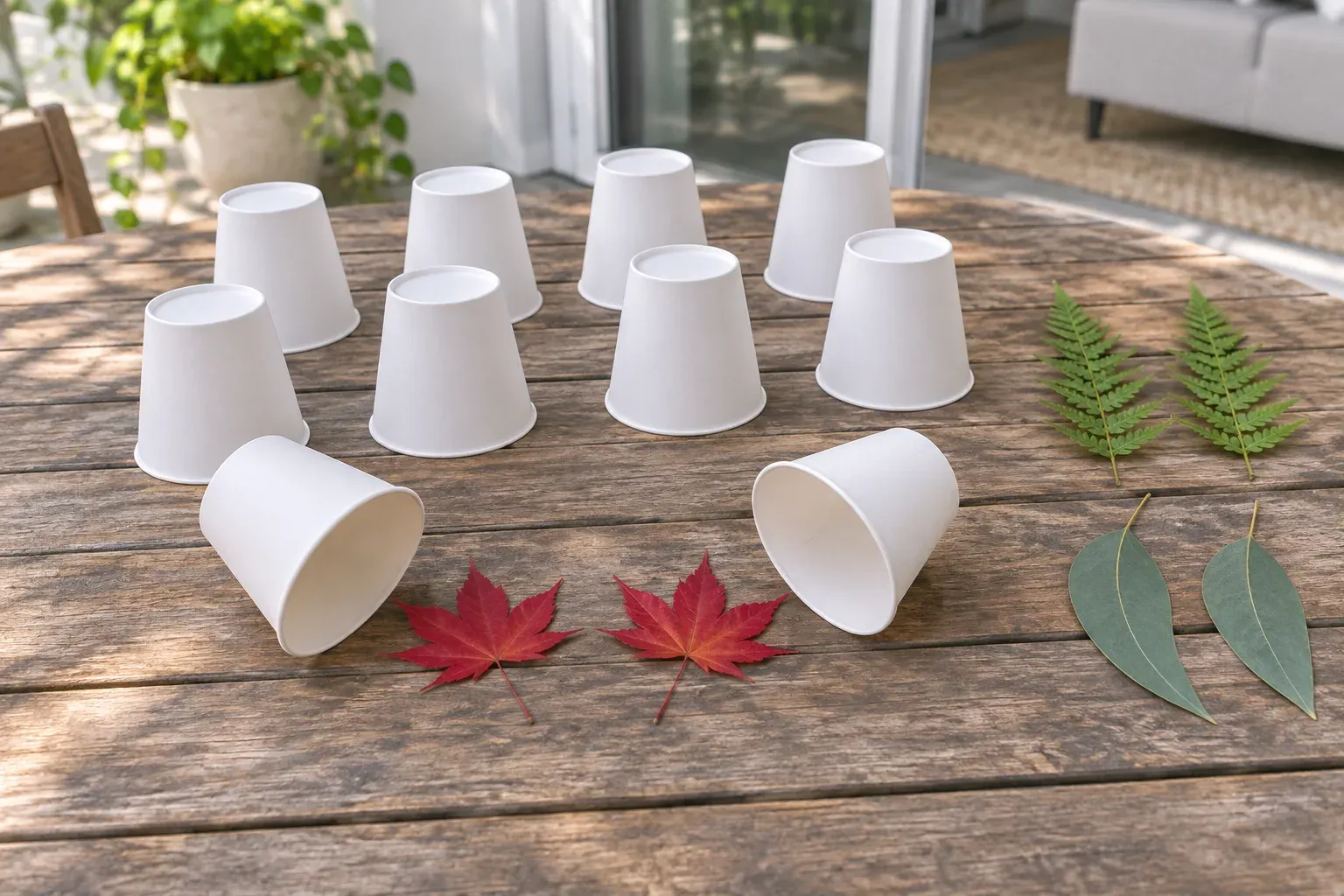
Hide pairs of leaves under paper cups and take turns lifting two to find a match.
- Age
- 3 to 6 years
- Play time
- 15 min
- Set-up
- 10 min prep
- Where
- Indoors or outdoors
- Who
- Any number of kids
- Clean-up
- Low mess
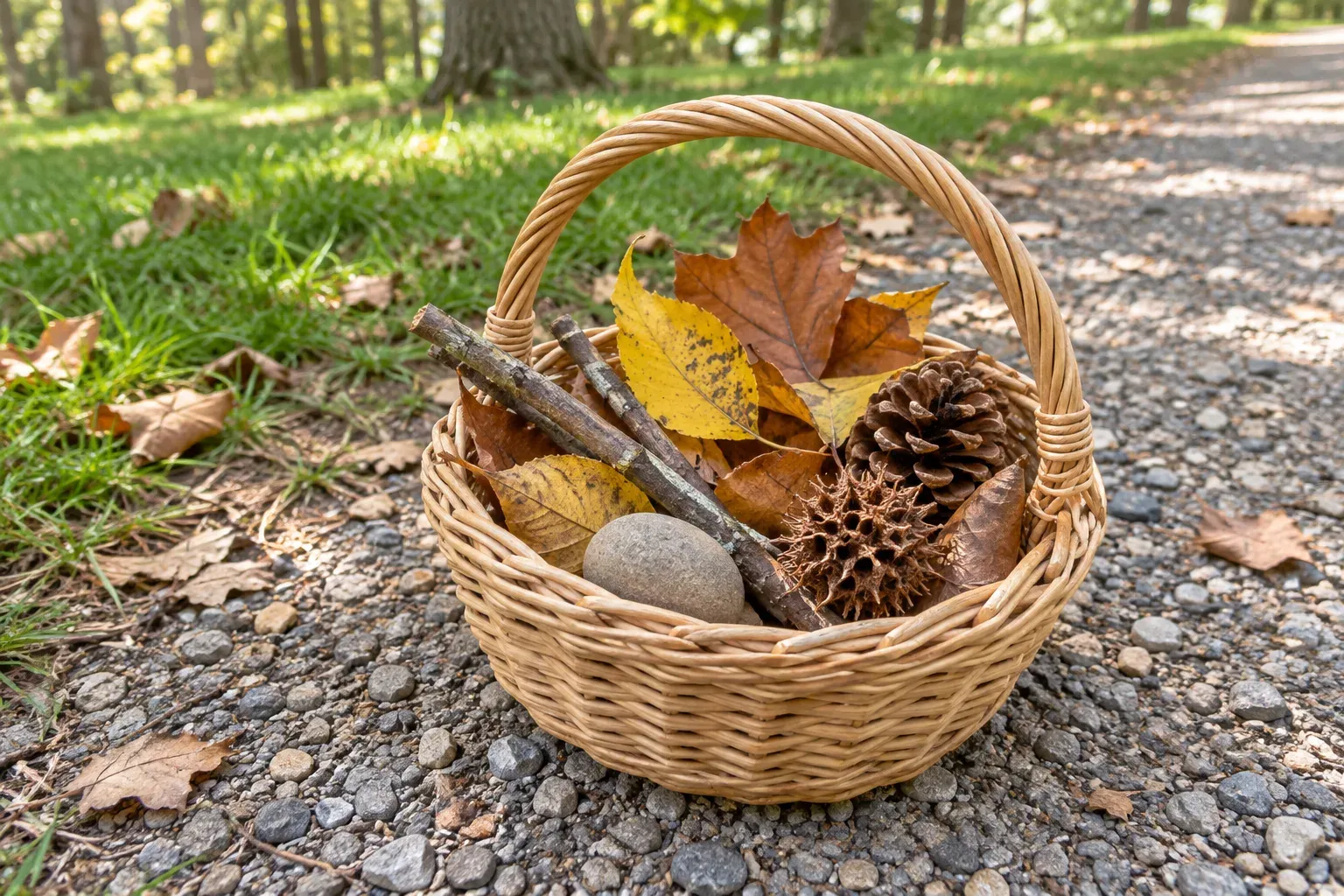
Collecting the leaves is half of it. A walk round the garden or park hunting for two the same makes children look properly at shapes and edges, and they are usually surprised by how different one plant is from the next. The game afterwards is ordinary pairs under paper cups, played on the grass or a table. Leaves curl and crumble by the next day, so treat the set as good for one afternoon.
The game underneath is the one known as Pairs, Memory or Concentration.
How to play
-
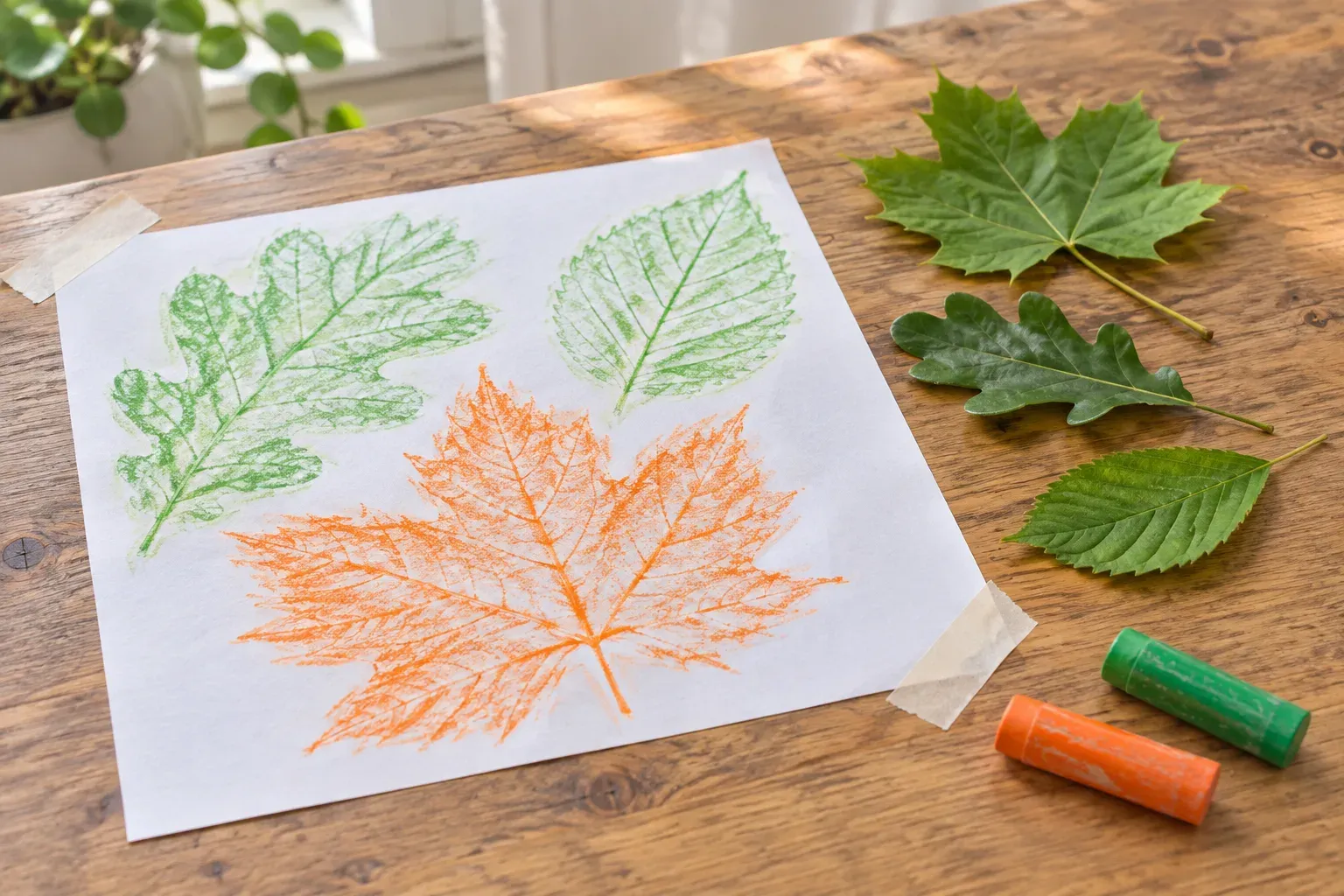
Collect two matching leaves from each of four to six different plants, picking kinds that look clearly different from each other.
-
Lay all the leaves out and match up the pairs together first.
-
Spread the leaves out on a table or the ground and cover each one with an upturned paper cup. Shuffle the cups around.
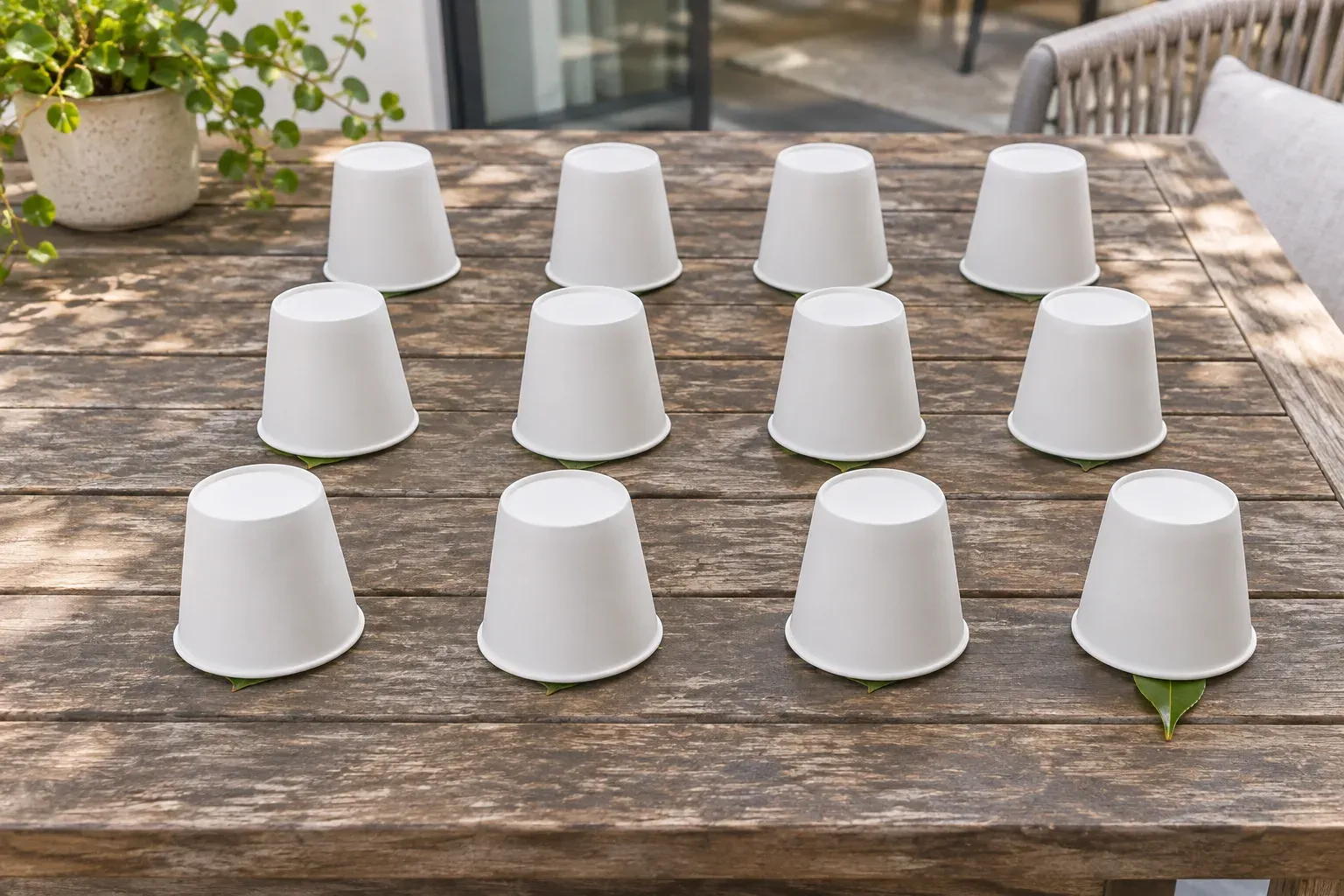
Neat rows make it easier to remember each spot -
Take turns lifting two cups. If the leaves match, keep the pair. If not, cover them again.
-
Play until every pair is found, comparing shapes and sizes as you go.
-
Use three pairs for younger children and add more as the game gets easy.
What you need
- pairs of leaves
- paper cups
Don't have it?
- No paper cups? Cover each leaf with a yoghurt pot, a mug or a square of card.
- Not many plants about? Pairs of pebbles, feathers or shells work, as do a big and a small leaf from each tree.
What they are practising
- problem solving. Your child has to remember what was under each cup and use that to pick the second leaf.
- turn taking. Each player lifts two cups, then covers them and waits while the other has a go.
- language. Comparing the leaves brings in words for shape, size and edge, such as pointed, round, bigger and jagged.
Make it easier
Use three pairs of very different leaves and play a round with the cups off first, simply matching them.
Make it harder
Use six or more pairs including some that look alike, and ask your six-year-old to say what makes two similar leaves different before the cups go on.
Parents ask
- Which leaves are safe to pick?
- Use plants you recognise and know are harmless, and avoid anything with milky sap, berries, thorns or stinging hairs. Wash hands when you finish.
- The breeze keeps knocking the cups over. Any fix?
- Play on a table in a sheltered spot, or put a pebble on top of each cup. Indoors on the floor avoids the problem entirely.
- My child remembers where everything is and I do not. Is that normal?
- Very. Children are often better at this than adults, and losing gracefully to a four-year-old is part of the job.
Find more like this
3 year olds4 year olds5 year oldsIndoorsOutdoorsLow messNatureWith paperWith cups