Nature
Garden toy bug hunt
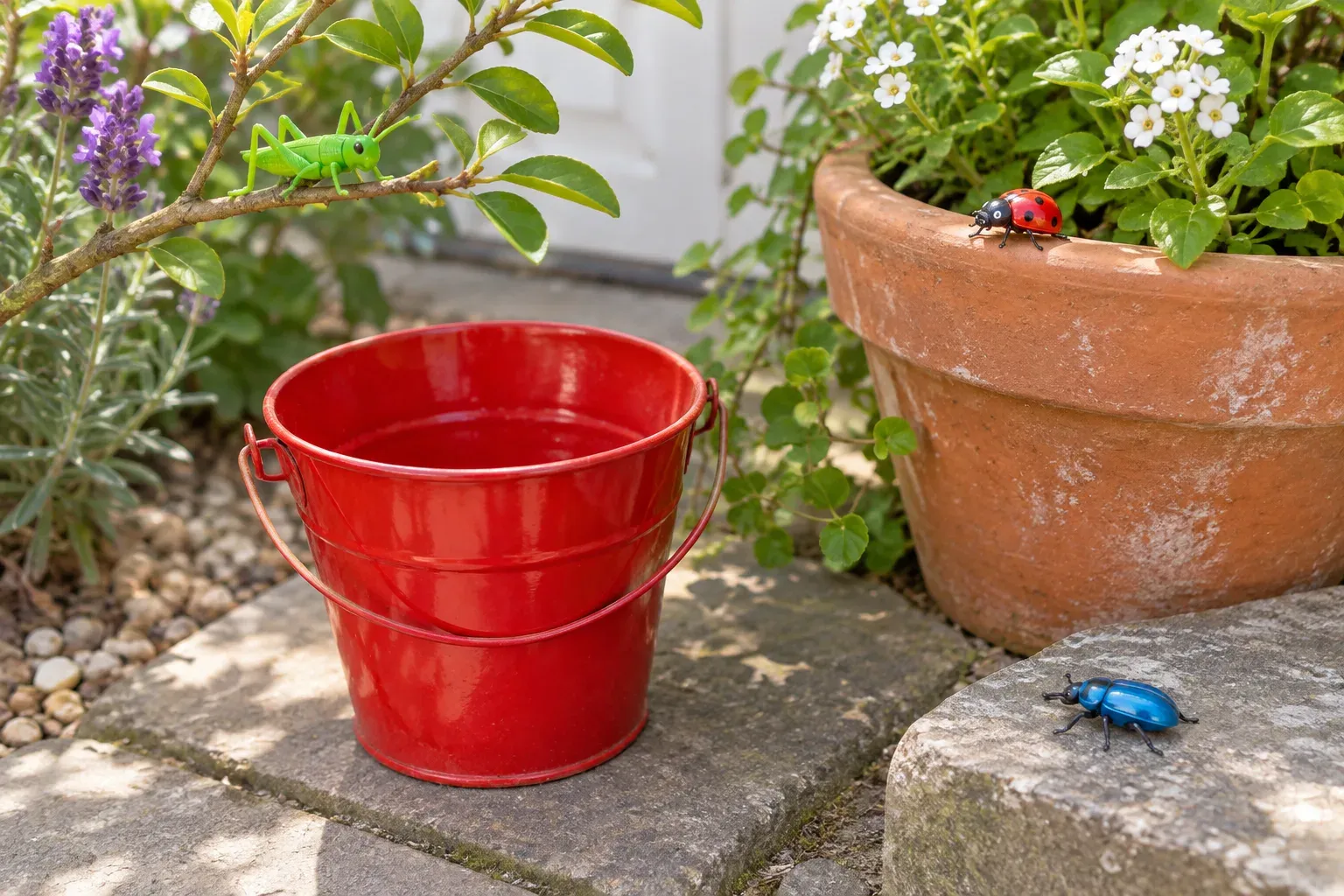
Hide plastic toy bugs around the garden at low height, then set off with a bucket to collect them all.
- Age
- 2 to 6 years
- Play time
- 15 min
- Set-up
- 5 min prep
- Where
- Outdoors
- Who
- Any number of kids
- Clean-up
- Low mess
Plastic beetles tucked beside flowerpots turn a familiar patch of garden into somewhere worth searching. A two-year-old charges about and needs you to stand suspiciously near each hiding place, while a five-year-old wants them hidden harder and the hunt timed. It gets everyone outside for a quarter of an hour with no setting up beyond a minute of hiding. Count them out and count them back, or the lawnmower will find the last spider in spring.
American readers would call the garden the yard.
How to play
-
Count the plastic toy bugs together so you both know how many there are.
-
While your child looks away, hide the bugs around the garden at their height or lower: on a low branch, beside a pot, on a step.
-
Hand your child a small bucket or jar and send them off to collect the bugs.
-
Give hints if they get stuck, such as "try near something yellow".
-
Count the bugs again to check they are all back, and talk about where each one was hiding.
-
For another round, let your child hide the bugs for you to find.
What you need
- plastic toy bugs
- small bucket or jar
Don't have it?
- No toy bugs? Hide large plastic animals or coloured blocks, choosing ones too big to go in a mouth.
- No bucket or jar? A basket or a small bag is fine for collecting.
Stay close
Small toy bugs are choking-size for children who mouth things.
What they are practising
- counting. The bugs are counted before hiding and again in the bucket, so your child checks one total against the other.
- problem solving. They use hints such as near something yellow to narrow down where to look.
- gross motor. Hunting means walking, crouching, reaching under things and carrying a bucket across uneven ground.
Make it easier
Hide just three or four large bugs in plain sight on the grass and walk round with your two-year-old holding the bucket.
Make it harder
Give a six-year-old spoken clues or a simple drawn map, hide the bugs under and behind things, and let them set a hunt for you afterwards.
Parents ask
- I have a baby who mouths everything as well as an older child. Can we still play?
- Yes, with bigger things to find. Small toy bugs are choking-size, so swap them for large plastic animals and count every one back in before the baby is on the grass.
- We cannot find the last bug. What now?
- Retrace your hiding route, since adults forget too. Hiding them in a set order, or taking a quick phone photo of each spot, saves this next time.
- What if we have no garden?
- A balcony, a shared courtyard or one room indoors works the same way. Keep the hiding places low and visible.
Find more like this
2 year olds3 year olds4 year olds5 year oldsOutdoorsLow messNature