Games
Jigsaw piece hunt
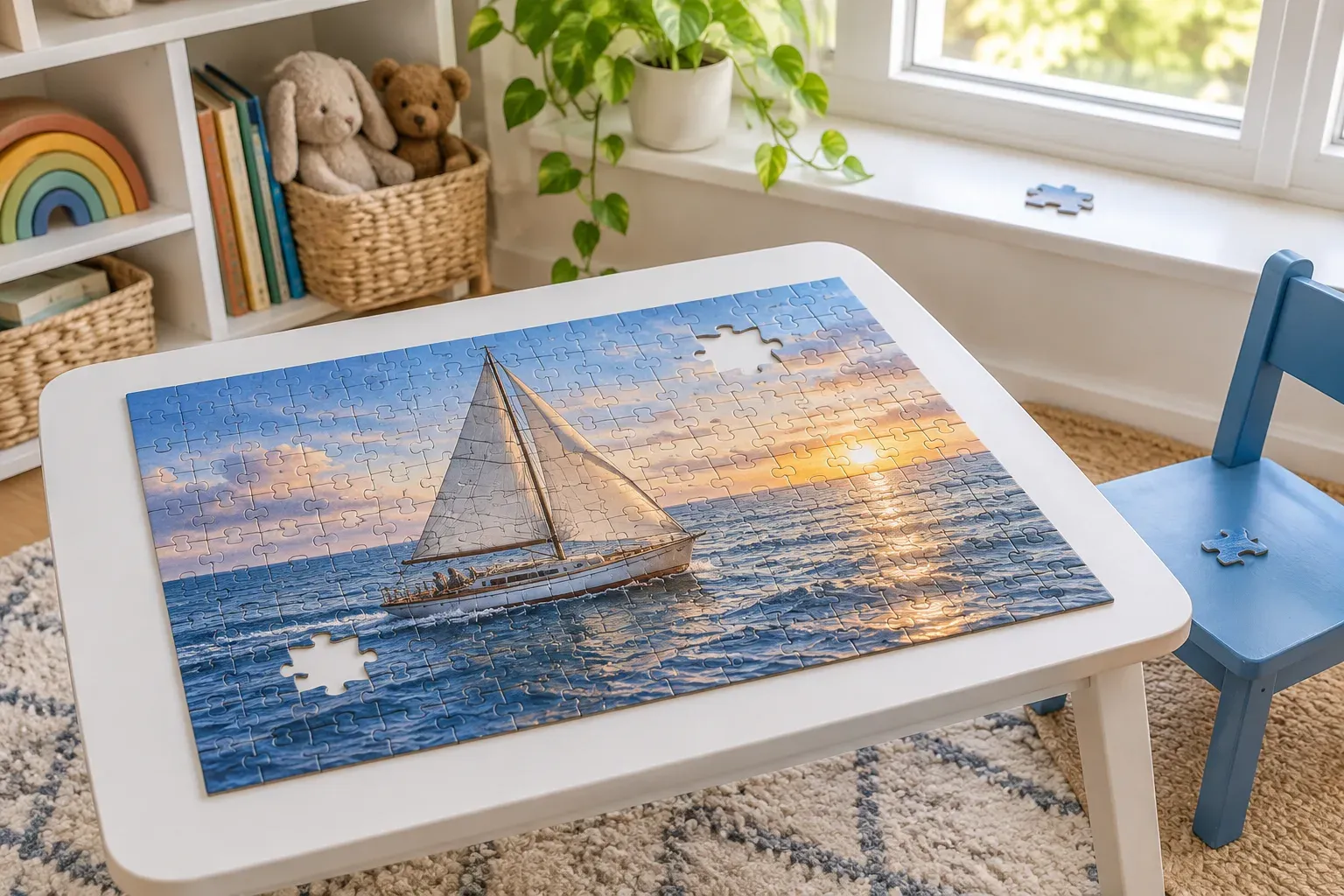
Hide jigsaw pieces around a room, gather them up, and start the puzzle to see which ones are still missing.
- Age
- 2.5 to 6 years
- Play time
- 25 min
- Set-up
- 3 min prep
- Where
- Indoors
- Who
- Any number of kids
- Clean-up
- Low mess
Hiding the pieces first turns a puzzle your child has done forty times into a new game. There is a good deal of running back and forth with one piece at a time, and the moment of discovering a gap in the picture sends them off again with real purpose. It suits an indoor morning when legs need using. Count the pieces before you hide them, and write the number down, because you will forget.
How to play
-
Choose a jigsaw your child can already manage and count the pieces so you know how many to find.
-
While they wait outside, hide the pieces around one room in easy places, such as on a chair, a windowsill or a shelf.
-
Send your child in to collect them all and bring them back to a table or clear patch of floor.
-
Start the puzzle together and see whether any pieces are missing.
-
Go back and hunt for the last pieces, giving warmer and colder clues if they are stuck.
-
For older children, hide the pieces less obviously or use a bigger puzzle.
What you need
- jigsaw puzzle the child can manage
Don't have it?
- No jigsaw to hand? Cut the front of a cereal box into six or eight large pieces and hide those.
What they are practising
- problem solving. Your child looks at the unfinished picture, works out what is missing and searches for those pieces.
- gross motor. The hunt has them crossing the room, stretching up to a windowsill and crouching to look under chairs.
- independence. They gather the pieces and carry them back to the table without an adult doing it for them.
Make it easier
Use a puzzle of six pieces or fewer and put them in plain view at your child's eye level around a small room.
Make it harder
Use a bigger jigsaw, hide pieces inside and under things, and give a six-year-old only warmer and colder clues, or a time to beat.
Parents ask
- What if a piece stays lost?
- Hide them only in one room, in places you can list, and count them back. If one is still missing, check under the sofa cushions and inside shoes before blaming the puzzle.
- My child wants to do the puzzle as each piece is found. Is that allowed?
- Of course. Some children like to place each piece straight away and go hunting for what the gaps need, which is arguably the cleverer way to play.
- Can a toddler sibling help?
- Yes, as a finder, provided the pieces are large. Thin cardboard pieces tend to get chewed, so use a chunky wooden puzzle if a toddler is joining in.
Find more like this
2 year olds3 year olds4 year olds5 year oldsIndoorsLow messGames