Games
Guess the feeling
Act out a feeling from a secret card without words while everyone else guesses what it is.
- Age
- 3 to 6 years
- Play time
- 10 min
- Set-up
- 5 min prep
- Where
- Indoors or outdoors
- Who
- Two or more kids
- Clean-up
- Low mess
Charades for people who cannot read yet. A three-year-old acting cross will stamp and scowl with total commitment, then announce the answer before anyone has guessed. It works at the dinner table, in a waiting room or in the car with the cards on a lap. The part where the winner tells a time they felt that way is where the real talk happens, and it can catch you off guard.
It is a version of charades, sometimes called emotion charades.
How to play
-
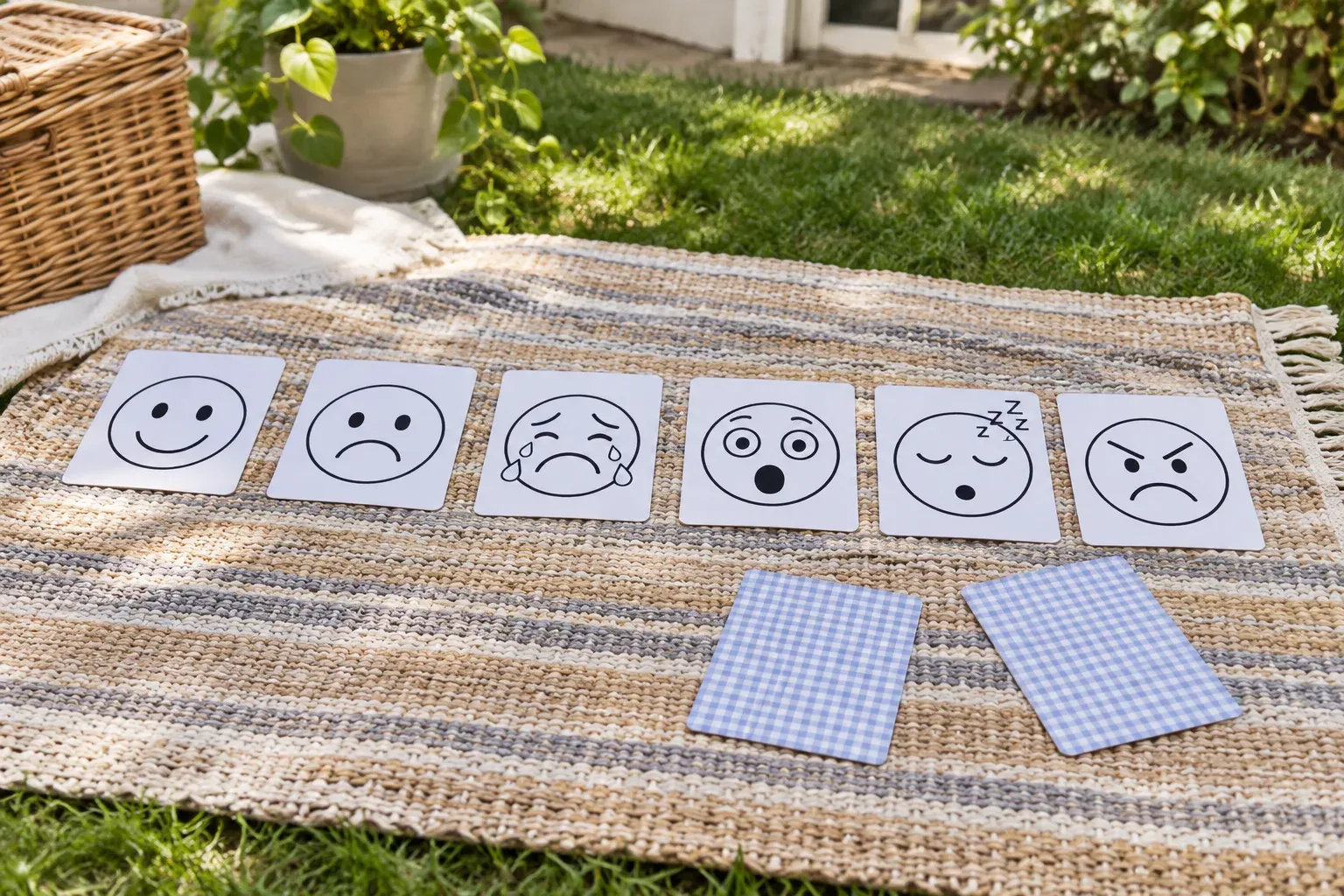
Prepare four to six cards, each with a simple drawn face showing one feeling, such as happy, sad, cross, scared, surprised and tired.
-
Go through the cards together first so everyone knows what each face shows.
-
Turn the cards face down. One player picks a card and keeps it secret.
-
They act out the feeling with their face and body, without words or sounds.
-
Everyone else guesses. Whoever gets it right says a time they felt that way, then takes the next turn.
-
For younger children, use just three cards and act the first few yourself.
What you need
- cards with drawn faces
Don't have it?
- No cards? Draw faces on paper plates or sticky notes, or whisper the feeling in the actor's ear.
What they are practising
- language. Your child puts a name to each feeling and then describes a time they felt it.
- turn taking. Only one person acts at a time, and the next turn passes to whoever guessed correctly.
Make it easier
Use three clear feelings, happy, sad and cross, do the acting yourself at first and let your three-year-old point to the matching card.
Make it harder
Add subtler feelings such as proud, shy, worried and disappointed, and ask a six-year-old to act a situation that causes the feeling instead of just the face.
Parents ask
- My child shouts out what the card says straight away. How do I keep it secret?
- Play a round where you are the only actor so they see how guessing works. After that, treat blurting as part of the fun for a while, because keeping a secret takes practice at three.
- What if a child tells a sad or worrying story on their turn?
- Listen, thank them, and say something simple such as that sounded hard. You can come back to it privately later, and the game does not need to stop.
- Can a younger sibling join in?
- Yes, as your acting partner. Toddlers will happily copy a sad or surprised face alongside you while the older child guesses.
Find more like this
3 year olds4 year olds5 year oldsIndoorsOutdoors10 minutes or lessLow messTwo or more kidsGames