Sensory
Frozen toy rescue
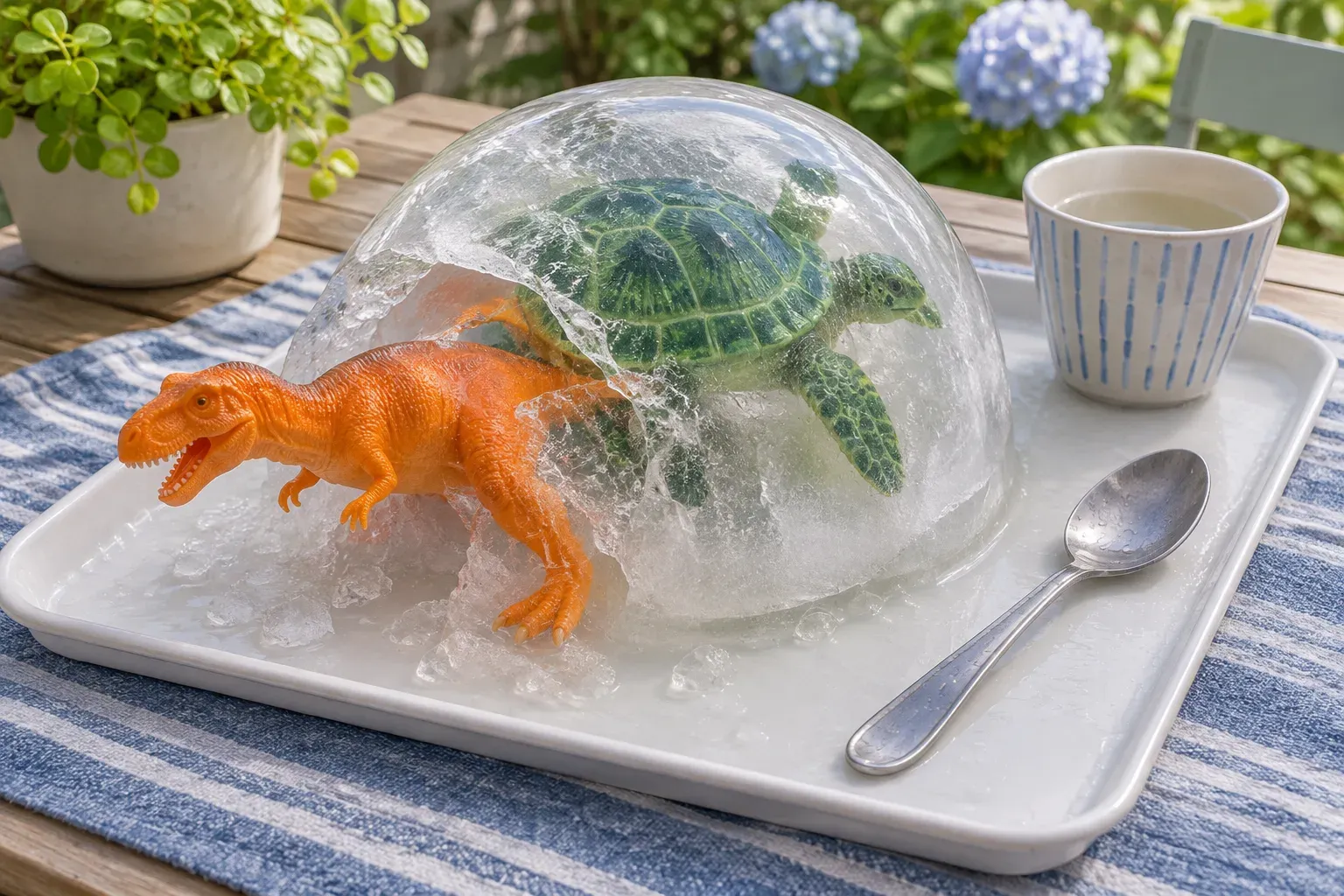
Free plastic toys frozen inside an ice block using warm water and a spoon, and feel how cold and slippery it is.
- Age
- 18 months to 5 years
- Play time
- 20 min
- Set-up
- 5 min prep
- Where
- Indoors or outdoors
- Who
- Any number of kids
- Clean-up
- Medium mess
Yesterday's dinosaur, sealed in a block of ice, is a sight that stops most children mid-sentence. The rescue itself is slow, which is the appeal: spoonful after spoonful of warm water, a hollow forming, a tail poking out. You need to remember to freeze it the night before. Do it outside in summer or on a towel-lined table, and expect requests for more warm water roughly every ninety seconds.
You may see this called an ice excavation or ice rescue.
How to play
-
The day before, put a few large plastic toys in a tub, cover them with water and freeze overnight.
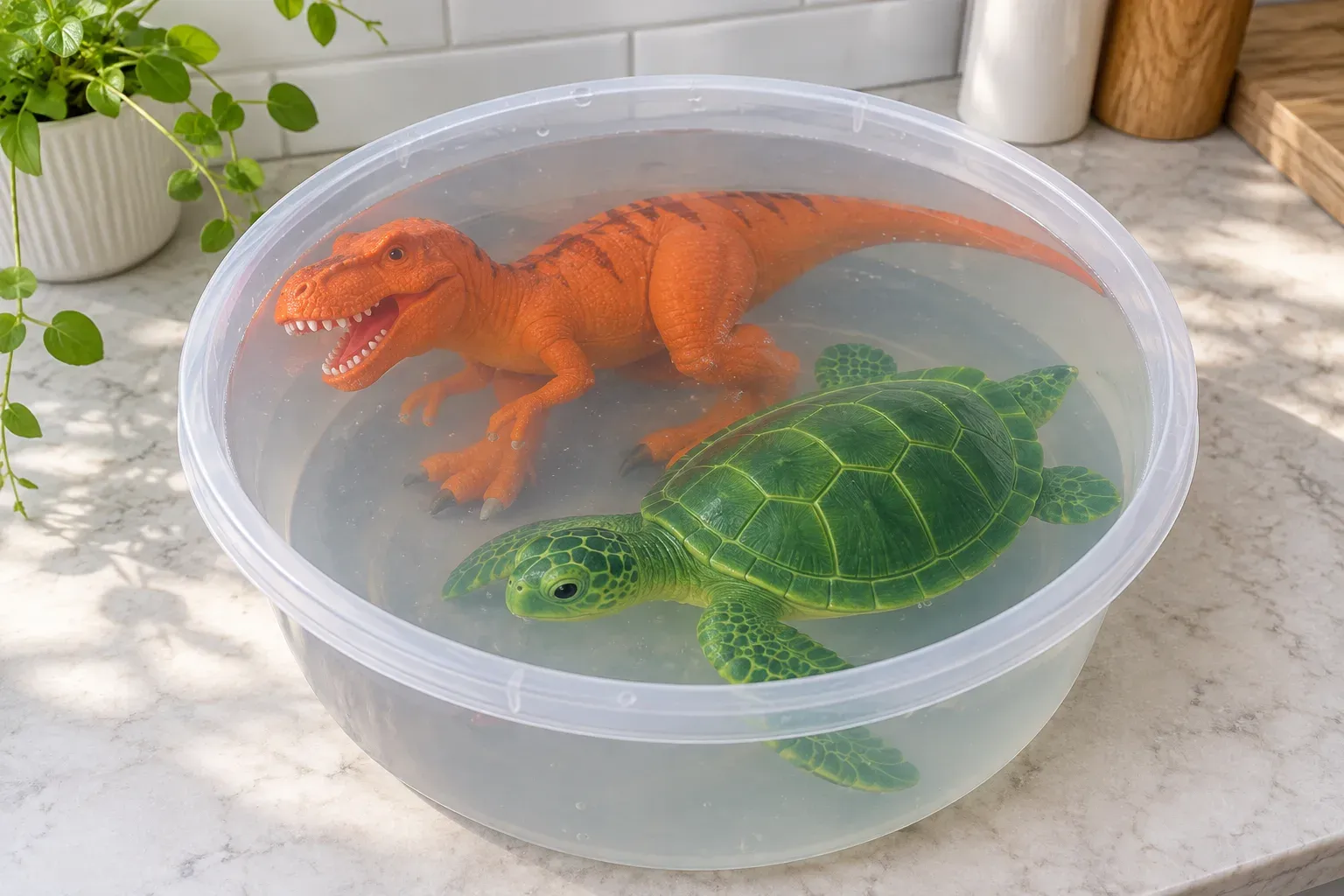
Choose toys too big to swallow before you freeze -
Dip the tub briefly in water to loosen the ice, then turn the block out onto a tray. Put a towel under the tray.
-
Give your child a spoon and a cup of warm water, comfortable to your hand and not hot.
-
Show how to spoon warm water over the ice and watch a hollow form.
-
Let them pour, spoon and chip until each toy comes free. Refill the warm water as needed.
-
Talk about how the ice feels as they work: cold, wet and slippery.
What you need
- ice cube tray or tub
- water
- large plastic toys
- tray
- warm water
- spoon
- cup
- towel
Don't have it?
- No suitable tub? A clean ice cream tub or a loaf tin makes a good-sized block.
- No large plastic toys? Freeze big plastic spoons, chunky building bricks or bath toys, all too large to swallow.
- No spoon for the water? A small plastic cup or a turkey baster moves warm water just as well.
Stay close
Freeze only toys too big to swallow, and avoid small ice cubes for under-threes.
What they are practising
- sensory exploration. Hands touch ice that is cold, wet and slippery, then feel the contrast of the warm water.
- problem solving. Your child sees where the ice is thinnest and aims the water there to free each toy.
Make it easier
Freeze one or two toys in a shallow layer so they come free quickly, and let the youngest pour from a small cup instead of managing a spoon.
Make it harder
Freeze the block in layers so toys sit at different depths, and offer a five-year-old a choice of warm water, a pinch of salt and a spoon to see which frees a toy fastest.
Parents ask
- How warm should the water be?
- Comfortably warm on the inside of your wrist, like a baby's bath, never hot. It melts the ice more slowly than hot water would, but nobody gets scalded when the cup tips over, and it will.
- Is it safe for my toddler when bits of ice break off?
- Stay beside them and take away any small chunks, since small pieces of ice are a choking risk for under-threes. One large block is safer than cubes for that reason.
- My child gave up before the toys were free. Now what?
- Leave the block on the tray and come back in twenty minutes, when it will have melted enough to finish quickly. Or run it under the tap together for the last bit.
Find more like this
1 year olds2 year olds3 year olds4 year olds5 year oldsIndoorsOutdoorsSensoryWith iceWith cups