Activities With Ice
Ice is free, comes out of the freezer ready to go and melts before anyone can get bored of it. These seven ideas use plain cubes, coloured cubes, frozen paint and a toy trapped in a block, plus ice cream shaken up in a bag for older children.
7 ideas
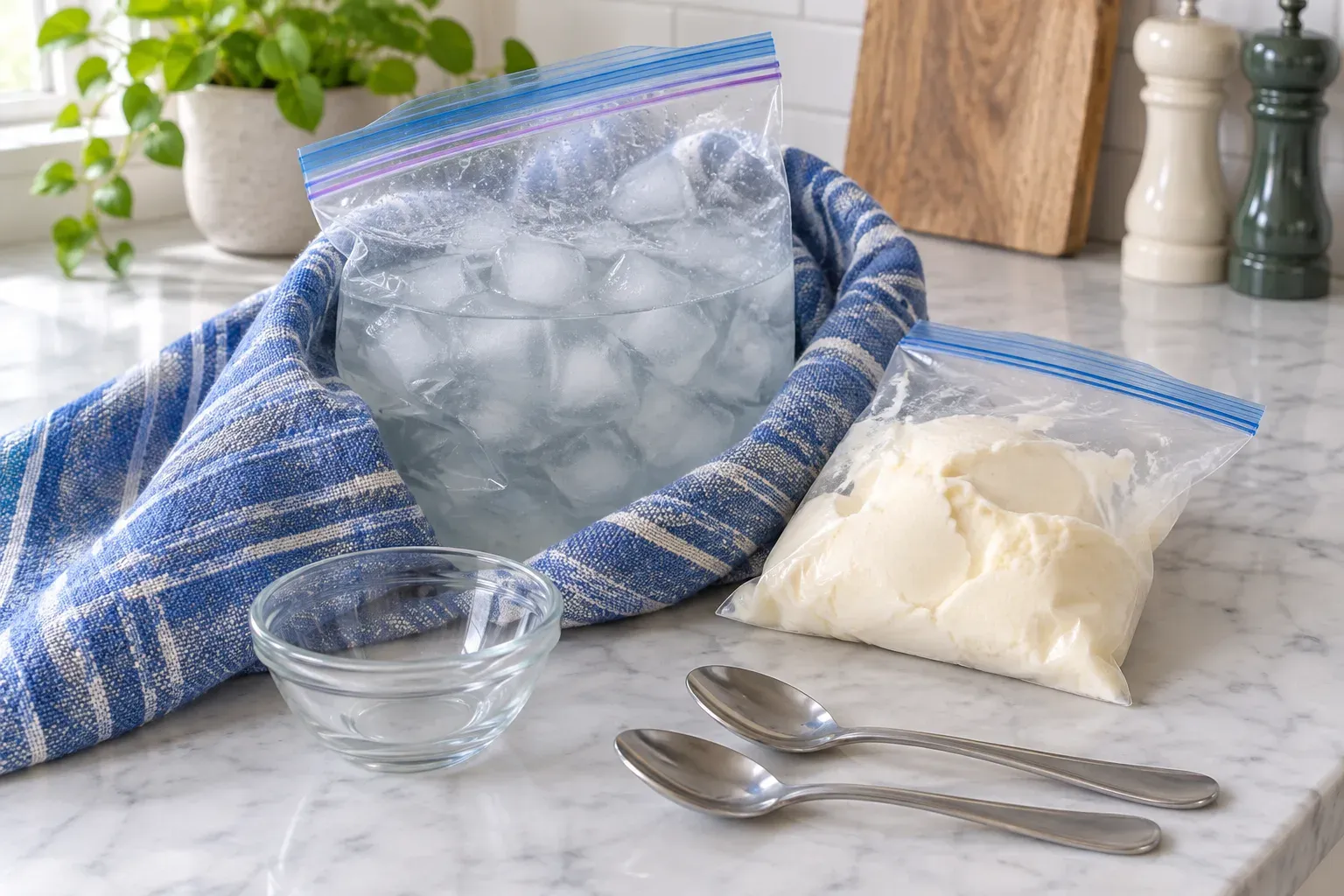 Kitchen Ice cream in a bag Seal milk, sugar and vanilla in a small bag, shake it inside a bag of salted ice, then eat it.
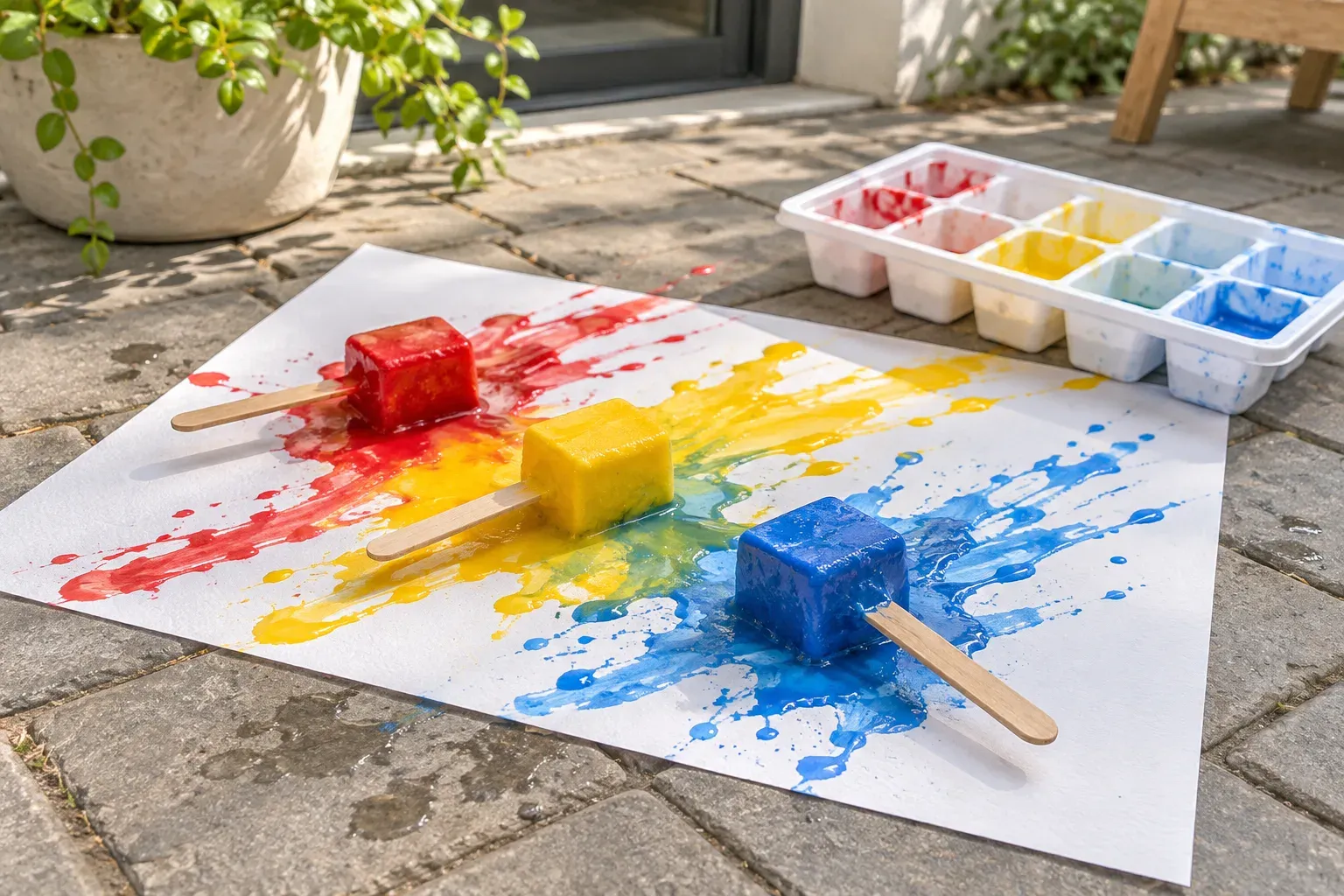 Art Ice-lolly paint cubes Freeze paint in an ice cube tray with lolly sticks, then pop the cubes out and paint with them as they melt.
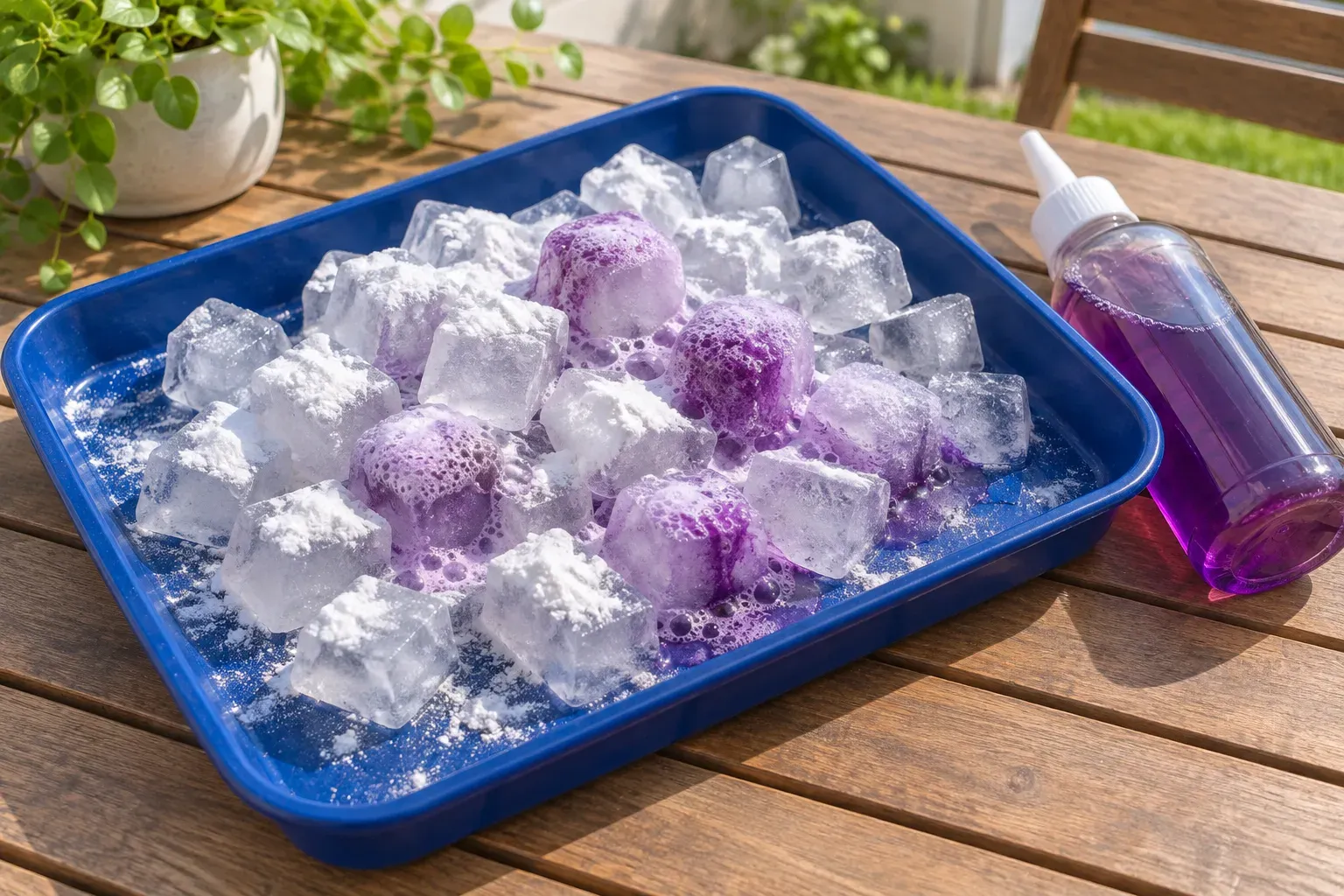 Kitchen Fizzing ice cubes Sprinkle bicarbonate of soda over ice cubes, then squirt coloured vinegar on top and watch the fizzing start.
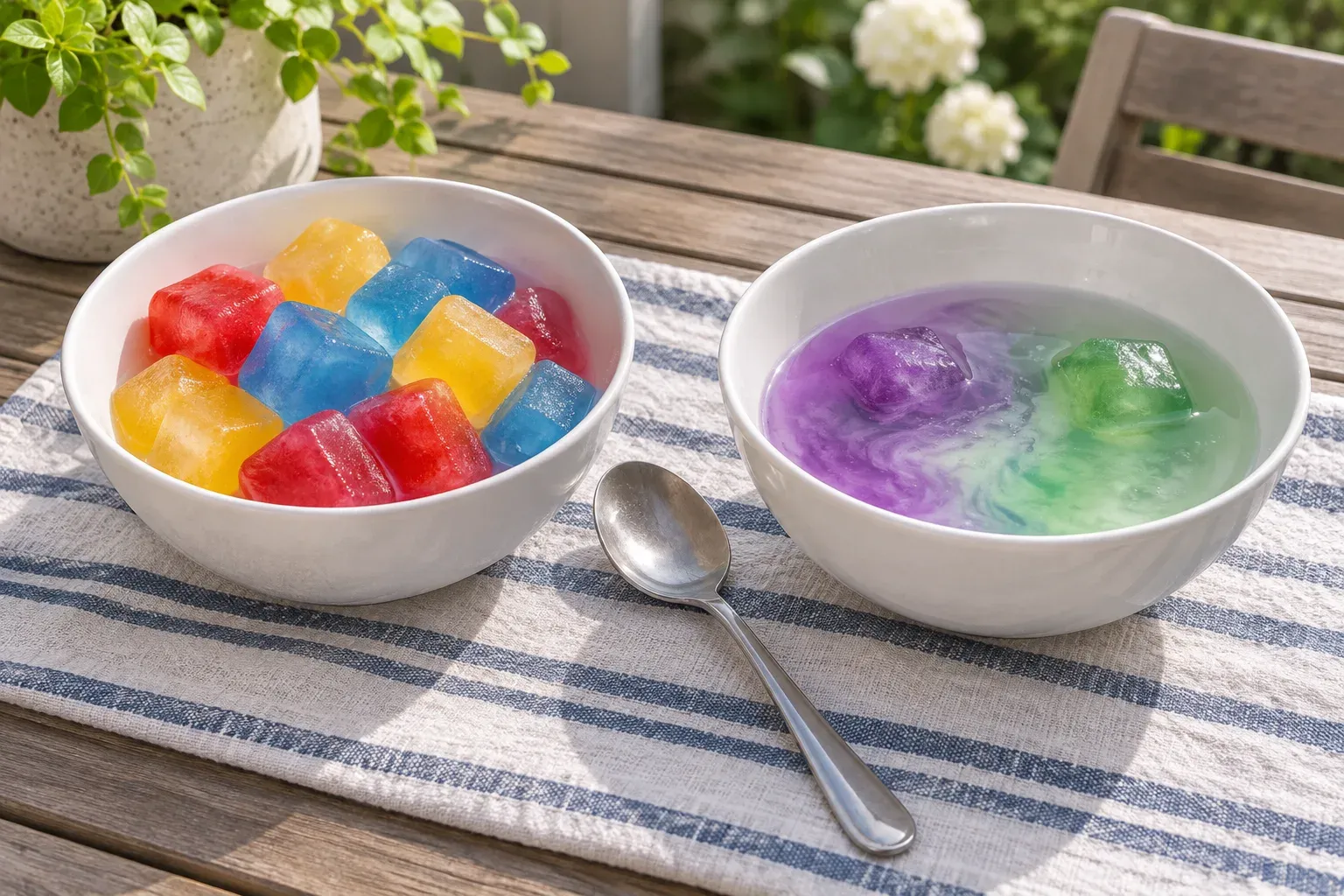 Water play Coloured ice cube transfer Move bright ice cubes into a bowl of warm water with a spoon or tongs and watch the colours seep out.
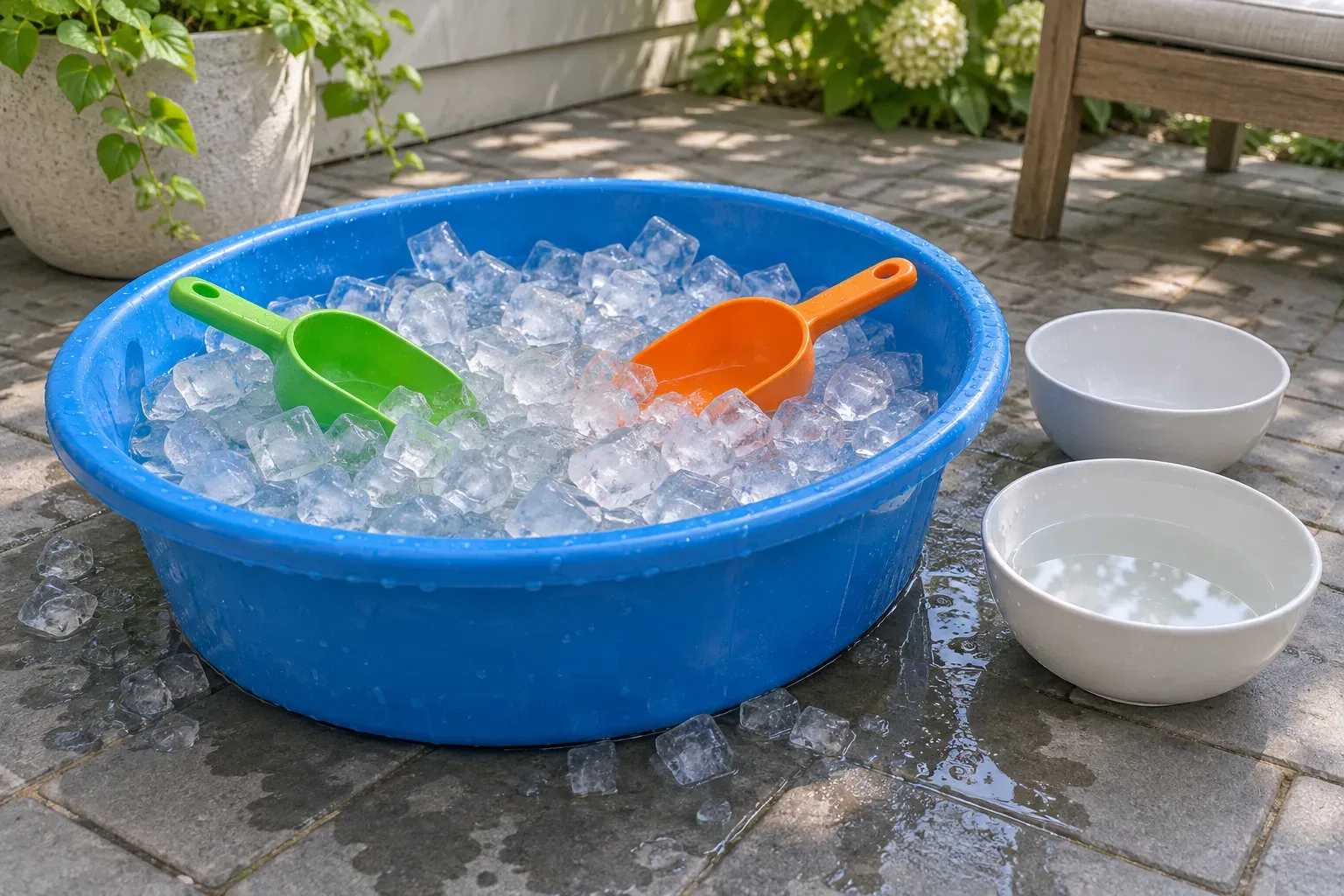 Sensory Ice cube exploration table Tip a big batch of ice cubes into a tub outside and scoop, pour and splash water over them as they melt.
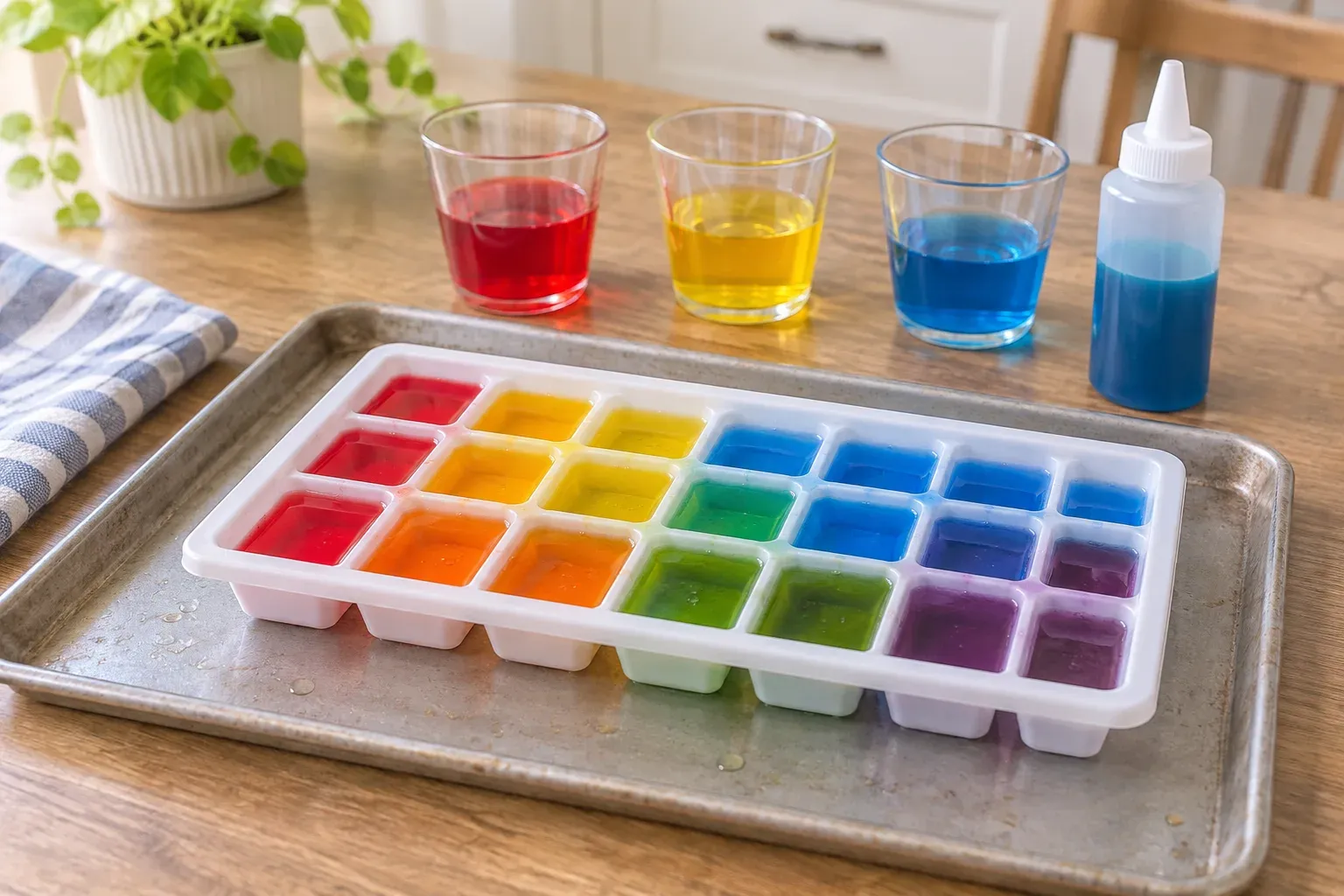 Water play Ice-tray colour mixing Squeeze red, yellow and blue water into an ice cube tray and watch the colours blend where they meet.
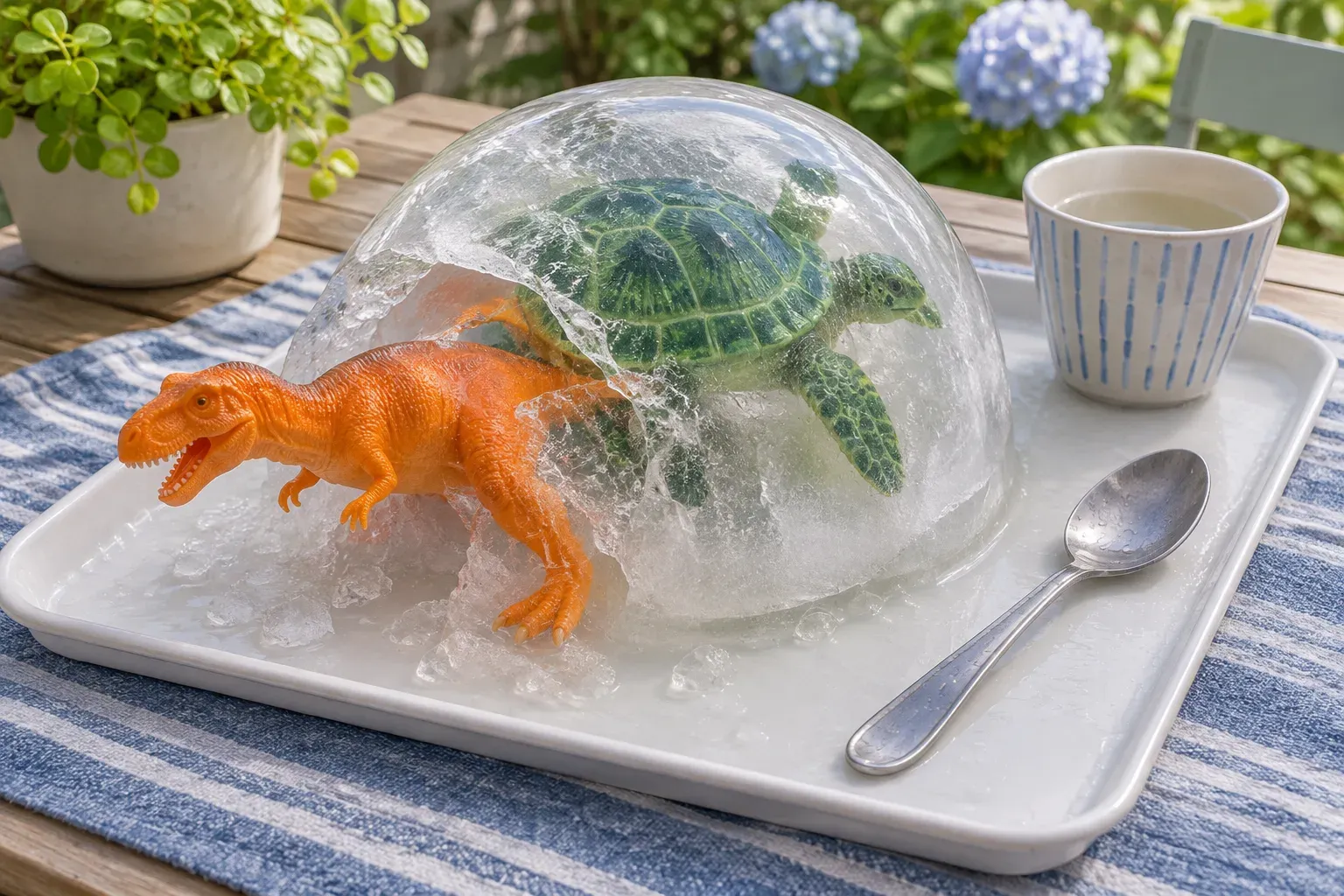 Sensory Frozen toy rescue Free plastic toys frozen inside an ice block using warm water and a spoon, and feel how cold and slippery it is.
Where to start
- Frozen toy rescue
Freeing a plastic toy from a block of ice with warm water and a spoon holds attention far longer than you would expect.
Sensory - Ice cube exploration table
A tub of ice cubes outside, a few scoops and some water. It works for toddlers and preschoolers together on a warm afternoon.
Sensory - Fizzing ice cubes
Bicarbonate of soda and coloured vinegar on ice makes a fizzing, colourful mess. Keep faces back, as vinegar stings eyes.
Kitchen
Freeze it the night before
The catch with ice play is that you have to think of it yesterday. Coloured cubes for Coloured ice cube transfer and Ice-tray colour mixing need a few hours, and a toy frozen solid in a tub for Frozen toy rescue really wants overnight. Fill a couple of trays when you are already in the kitchen after dinner and the morning is sorted. Label anything that is paint or dyed water, or put it in a separate tray, so nobody drops a blue cube into a drink.
Cold hands and small cubes
Small ice cubes are a choking risk for young toddlers, so for under-threes use big blocks frozen in tubs or keep cubes in a deep tray and stay right there. Little fingers get cold fast, so have warm water, a spoon and a towel ready and let them stop when they want. Ice cream in a bag uses salted ice, which gets much colder than the freezer, so wrap the bag in a tea towel or wear gloves. Outside on a hot day is the easiest place.
Parents ask
- Is ice play safe for toddlers?
- Yes with care. Use large blocks rather than small cubes for under-threes, stay within reach and keep an eye on cold hands.
- Can we do ice activities inside?
- On a tray with sides and a towel underneath, yes. Most of these melt into a fair amount of water, so the bath or the kitchen floor are easier than the carpet.
Related lists
With pom-pomsWith a cardboard boxWith tapeWith paintWith chalkWith paperWith blocksWith toy carsWith riceWith play doughWith stickersWith a ball