Nature
Bird watching
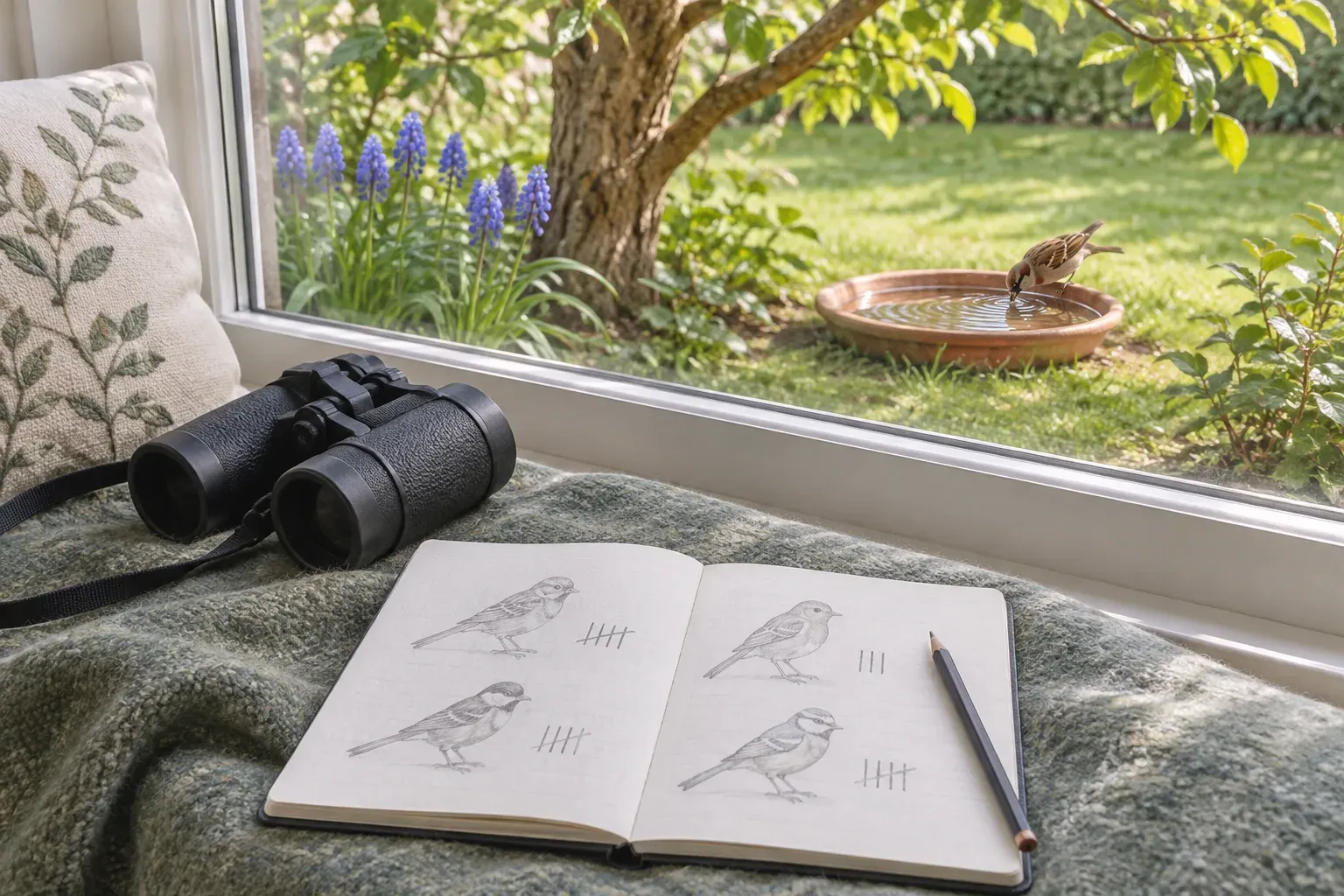
Sit quietly by a window or in the garden with binoculars and a notebook, spotting, counting and drawing visiting birds.
- Age
- 4 to 6 years
- Play time
- 20 min
- Set-up
- 10 min prep
- Where
- Indoors or outdoors
- Who
- Any number of kids
- Clean-up
- Low mess
Birdwatching sounds as if it needs a patience no four-year-old has, but a window seat and a tally chart change that. Sparrows, pigeons, magpies and the like turn up often enough to keep the chart filling. Early morning is busiest, and a dish of water draws visitors on hot days. Expect whispering, then a loud announcement that scares everything off, then a surprisingly calm quarter of an hour once they settle.
Many people call this birding.
How to play
-
The day before, put a shallow dish of water near a bush or tree that you can see from a window or a garden bench.
-
Make a simple picture chart of four or five birds you often see nearby, with space beside each for tally marks.
-
Sit down together and spend the first minute with eyes closed, just listening and counting how many different calls you can hear.
-
Then watch. When a bird lands, describe it together: its size, its colours and what it is doing. Add a tally mark if it is on the chart.
-
If you have binoculars, show your child how to find the bird with their eyes first, then lift the binoculars without looking away from it.
-
Before you finish, let them draw the most interesting bird they saw, and look up its name together later.
What you need
- a window or quiet spot outside
- binoculars (optional)
- notebook and pencil
- shallow dish of water
- drawings or printouts of a few local birds
Don't have it?
- No binoculars? Tape two toilet-roll tubes together as pretend ones, which help frame and focus on one spot.
- No garden? A park bench or a window facing a street tree works just as well.
Stay close
Never look at the sun through binoculars. Outside, stay well back from nests, and keep the water dish shallow.
What they are practising
- counting. Adding a tally mark for every bird and totting them up at the end gives counting a purpose.
- language. Describing a bird's colour, size and behaviour asks for precise words about what they see.
- problem solving. Matching a real bird to a picture on the chart means comparing beaks, colours and sizes.
Make it easier
For a four-year-old, sort birds by size, small, medium or big, rather than by name, and keep each session to about ten minutes.
Make it harder
A six-year-old can keep a weekly log, compare which birds come in the morning and in the afternoon, and learn the names of five regulars.
Parents ask
- Do we need a bird feeder?
- No. A dish of water and some shrubs bring plenty in, and feeding wild birds is discouraged in some places, so check local advice before adding one.
- How long will a four-year-old actually sit still?
- Plan on ten minutes and treat anything more as a bonus. Moving between two or three watching spots helps.
- What if we see nothing?
- Listen for calls instead and tally those. Birds go quiet at midday and in strong wind, so try again early the next morning.