Kitchen
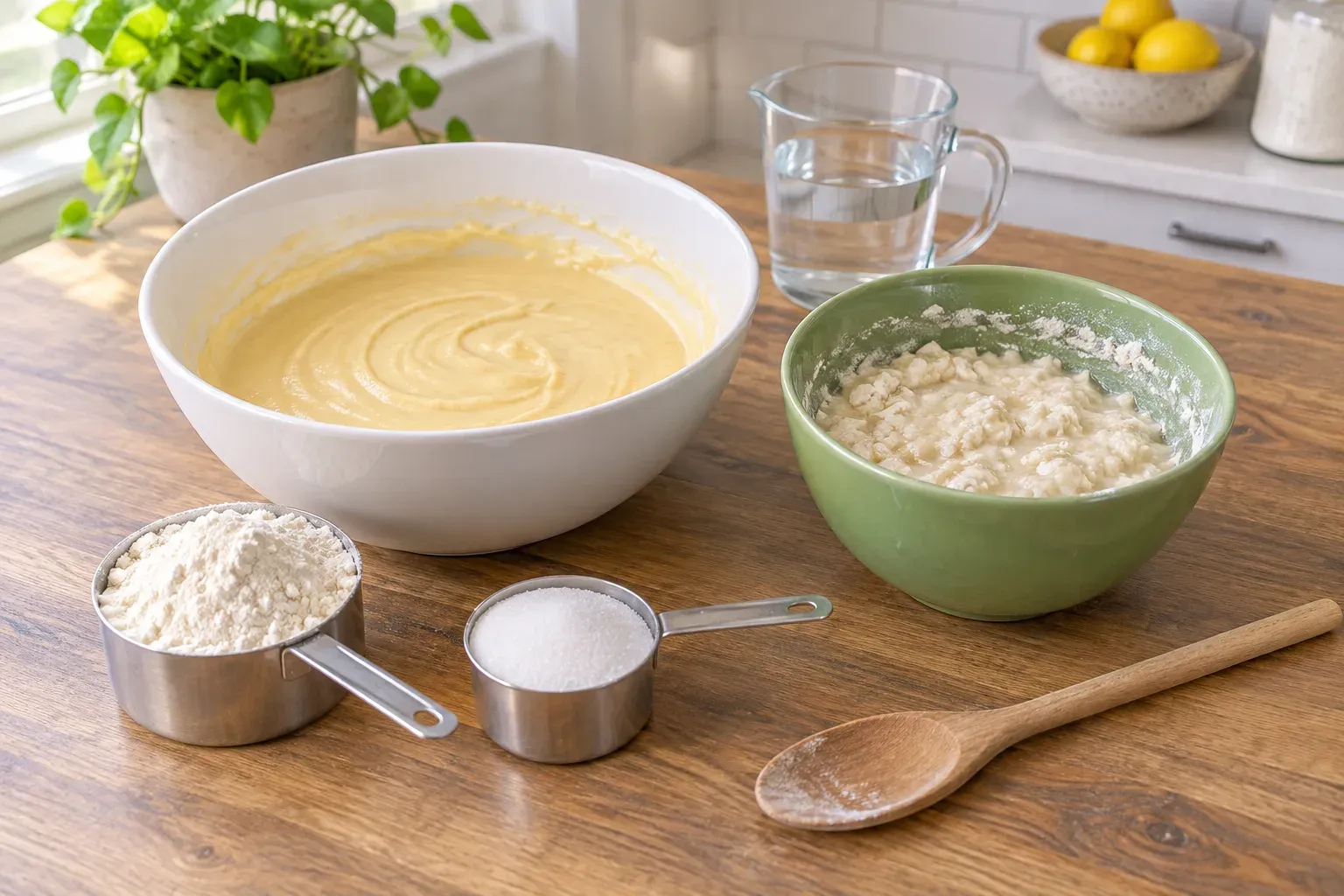
Two-bowl baking
Tip, add water and stir in your own bowl of flour and sugar while a grown-up bakes the real batch alongside.
- Age
- 2 to 6 years
- Play time
- 25 min
- Set-up
- 5 min prep
- Where
- Indoors
- Who
- One child
- Clean-up
- Medium mess
Baking with a small child sounds lovely until they tip half a bag of flour into your cake. A bowl of their own solves it: they pour, stir and add water to their heart's content, and your batch stays edible. Do it whenever you were going to bake anyway. Their mixture will end as grey paste on the table and up their arms, and they will want to taste it, which is the one thing to hold firm on.
How to play
-
Set out two mixing bowls: one for your real recipe and one for your child. Stand your child safely at the bench or sit them at the table.
-
Put a little flour and sugar into measuring cups for your child, a few spoonfuls of each.
-
As you add ingredients to your bowl, let your child tip theirs into their own bowl.
-
Give them a small cup of water to pour in and a spoon to stir with. They can add more flour or water and keep mixing while you finish yours.
-
Remind them that this mixture is for stirring, not tasting, as raw flour is not safe to eat.
-
Bake your batter as the recipe says. Tip the practice mixture in the bin and wash hands.
What you need
- 2 mixing bowls
- flour
- sugar
- water
- spoon
- measuring cups
Don't have it?
- No measuring cups? Mugs, egg cups or small yoghurt pots pour just as well.
- Short of mixing bowls? A saucepan or a large plastic tub does for the practice bowl.
- Would you rather not waste sugar? Leave it out, as flour and water alone are enough for stirring.
Stay close
Do not let children eat raw flour or egg.
What they are practising
- fine motor. Tipping a cup without missing the bowl, pouring water and stirring a thickening mixture all work the hands and wrists.
- counting. Spoonfuls and cups get counted aloud as they go in: one, two, three.
- independence. Having a bowl that is theirs alone lets your child decide what goes in next and do it without help.
Make it easier
Fill two cups in advance for a two-year-old, give them a short-handled spoon, and put a damp cloth under the bowl so it does not skate about.
Make it harder
Let a six-year-old count out their own spoonfuls, find the numbers in your recipe and help weigh the real ingredients.
Parents ask
- Why can they not lick the spoon?
- Raw flour is not treated to kill bacteria, and raw egg carries its own risk, so neither is for tasting. Offer a piece of banana to nibble while they stir, and let them try the finished bake.
- What do I do with their mixture at the end?
- Bin it. It contains raw flour and has had hands in it, so it is not for baking, and a bowlful of flour paste will clog the sink.
- My child wants to stir the real bowl too. Can they?
- Give them one or two jobs in yours, such as tipping in a cup you have measured, or a few stirs with your hand on the spoon. Then it is back to their own bowl, with a hand wash if they touched raw mixture.
Find more like this
2 year olds3 year olds4 year olds5 year oldsIndoorsKitchenWith cups