Art
Salt and glue painting
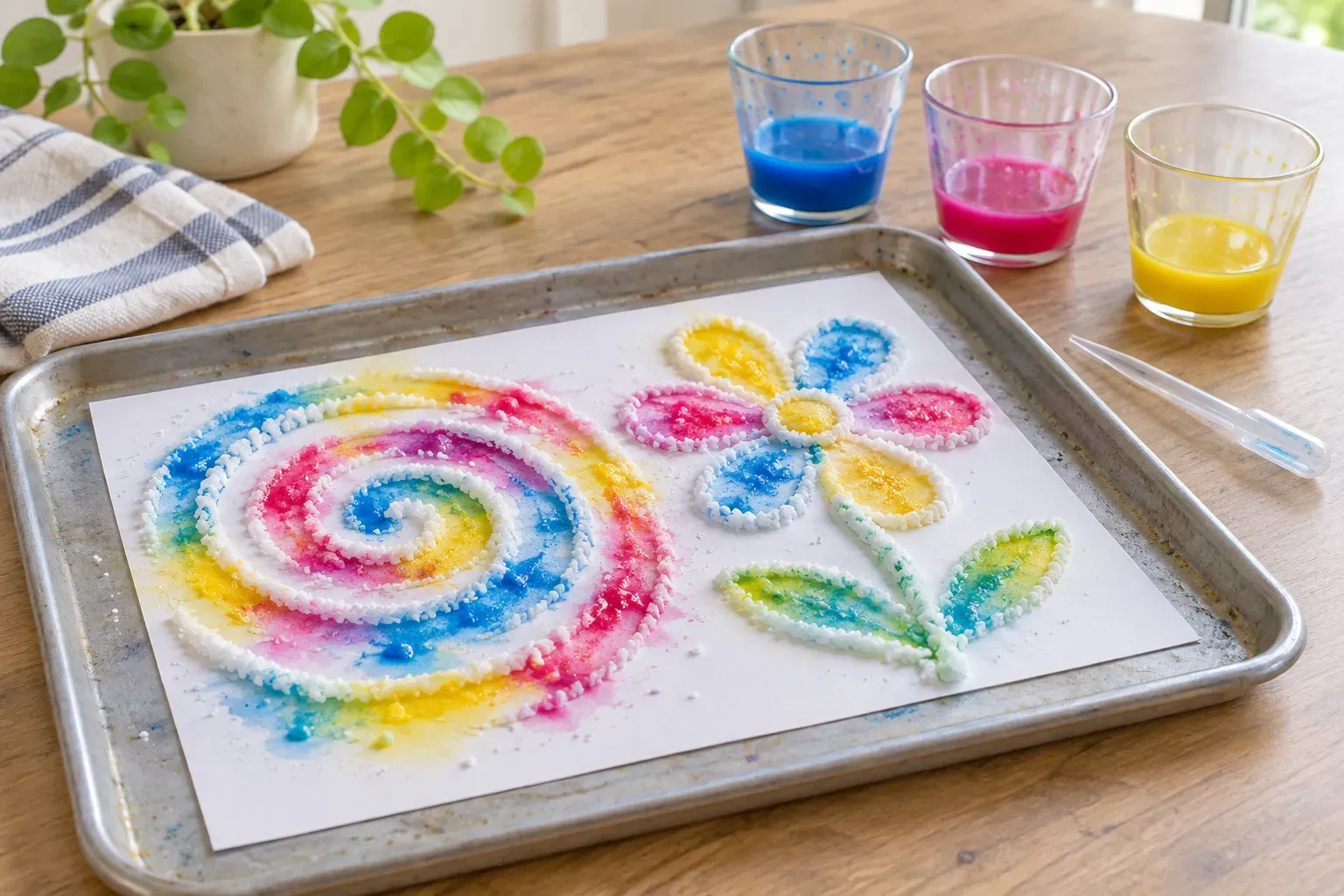
Squeeze glue lines onto card, bury them in salt, then touch on watery paint and watch the colour creep along.
- Age
- 3 to 6 years
- Play time
- 20 min
- Set-up
- 5 min prep
- Where
- Indoors
- Who
- Any number of kids
- Clean-up
- Medium mess
The magic moment is the first dab. A drop of blue lands on a salty line and runs off sideways along it, much further than seems possible. Most children gasp, then want to do it to every inch of the picture. Squeezing the glue bottle is harder than it looks, so you may end up drawing the shapes yourself. Plan for a day of drying on a flat shelf, and some salt crunching underfoot.
Also called raised salt painting, and PVA glue is sold as white school glue in the US.
How to play
-
Put a sheet of thick card on a baking tray. Mix a few runny colours in small cups, either watercolour paint with plenty of water or a few drops of food colouring in two tablespoons of water each.
-
Help your child squeeze lines of PVA glue straight from the bottle onto the card: a name, a spiral, a squiggly flower. Thick lines work better than thin ones.
-
Pour salt over the whole card so every glue line is buried, then tip the card up and tap it so the loose salt falls onto the tray.
-
Show them how to touch a loaded brush or pipette onto a salty line and hold still. The colour travels along the salt on its own.
-
Let them add colour after colour, watching where two meet and blend. Dabbing works better than brushing, which scrapes the salt off.
-
Lay it flat somewhere warm to dry, which takes about a day, and tip the leftover salt from the tray into the bin.
What you need
- thick card
- PVA glue in a squeeze bottle
- table salt
- baking tray
- watercolour paint or food colouring
- water
- small cups
- paintbrush or pipette
Don't have it?
- No pipette? A paintbrush loaded with lots of watery paint and dabbed, not brushed, does the same job.
- No squeeze bottle? Dribble the glue off the end of a teaspoon.
Stay close
Salt stings eyes and sore skin, so wash hands afterwards, and keep the salt pot away from anyone likely to eat it by the spoonful.
What they are practising
- fine motor. Squeezing a glue bottle steadily and lowering a brush to just touch a line both take a controlled grip.
- colours. Watching blue and yellow run into each other along the salt shows a new colour forming in front of them.
Make it easier
For a three-year-old, draw bold glue shapes for them and let them do the salt pouring and the colour dabbing, which are the best bits anyway.
Make it harder
A six-year-old can write their name in glue, plan which colour goes on each letter, and try to stop two colours from meeting.
Parents ask
- Why is my picture falling apart as it dries?
- Usually the glue lines were thin or the card was flimsy and bent. Use thick card and generous glue, and keep it flat until it is completely dry.
- How long will it last?
- Weeks if it stays flat, but the salt flakes off if the card bends. Slip it into a plastic sleeve or a frame if it is a keeper.
- Will food colouring stain?
- It can mark clothes and some tabletops, so use an old shirt and keep everything on the tray. Watercolour paint washes out more easily.
Find more like this
3 year olds4 year olds5 year oldsIndoorsArtWith paintWith cups