Art
Play dough feeling faces
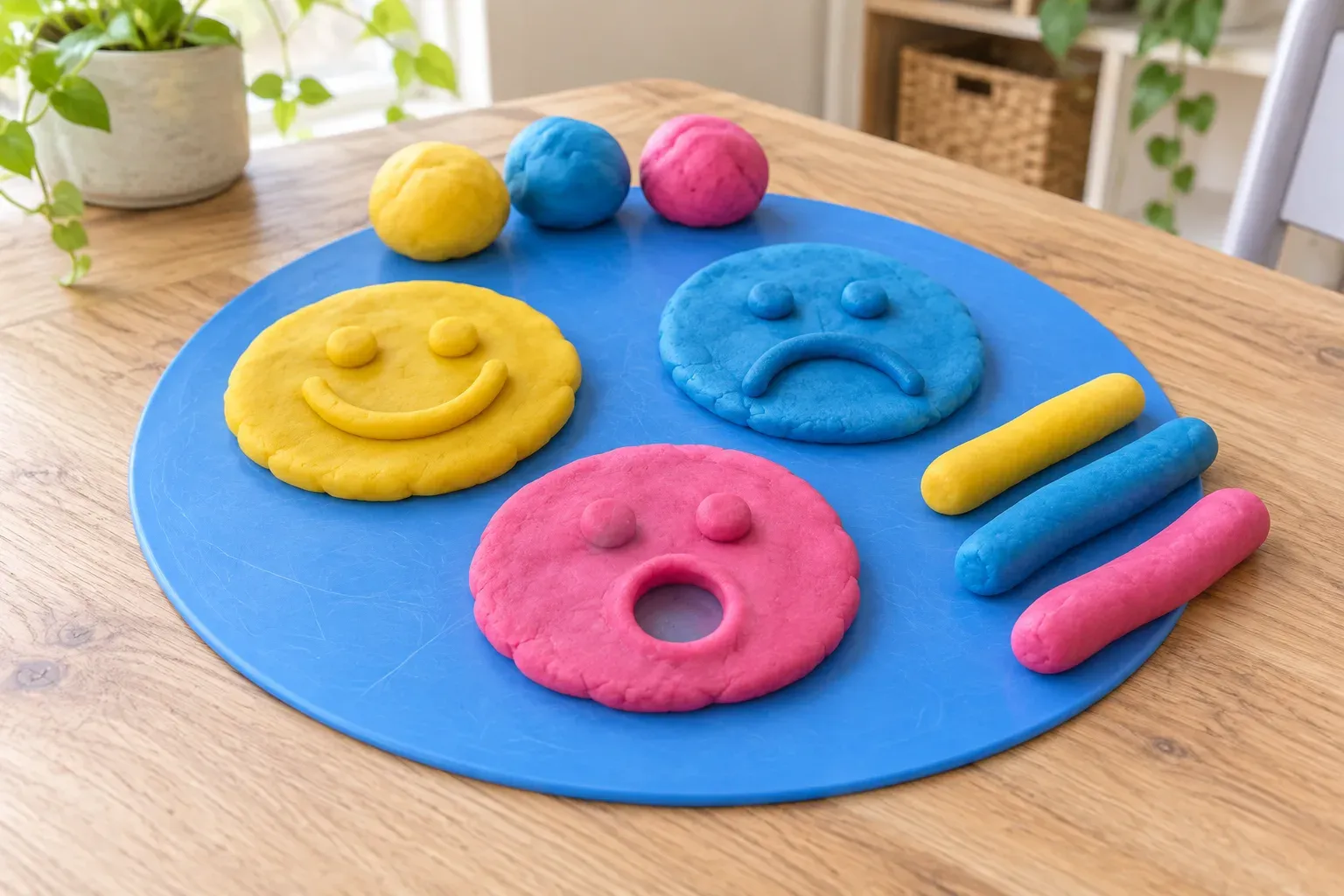
Roll a play dough face and give it eyes, brows and a mouth to match whichever feeling you name.
- Age
- 3 to 6 years
- Play time
- 15 min
- Set-up
- 2 min prep
- Where
- Indoors
- Who
- Any number of kids
- Clean-up
- Medium mess
Eyebrows do most of the work, it turns out. Tilt two little dough sausages inwards and the face is furious; flip them and it looks worried. Children enjoy the instant change, and conversations about feelings come more easily when everyone is looking at a lump of dough and not at each other. A good one for the table after nursery. Some days your child will just want to make snakes, and that is allowed.
How to play
-
Put a mat on the table and give each person a lump of play dough.
-
Roll a ball and flatten it into a circle about the size of your palm for the face.
-
Name a feeling, such as happy, sad, cross or surprised.
-
Roll small balls and sausages of dough and add eyes, brows and a mouth to match the feeling.
-
Talk about what might make someone feel that way.
-
Change the mouth and brows to turn the face into a different feeling, or let your child make a face for you to guess.
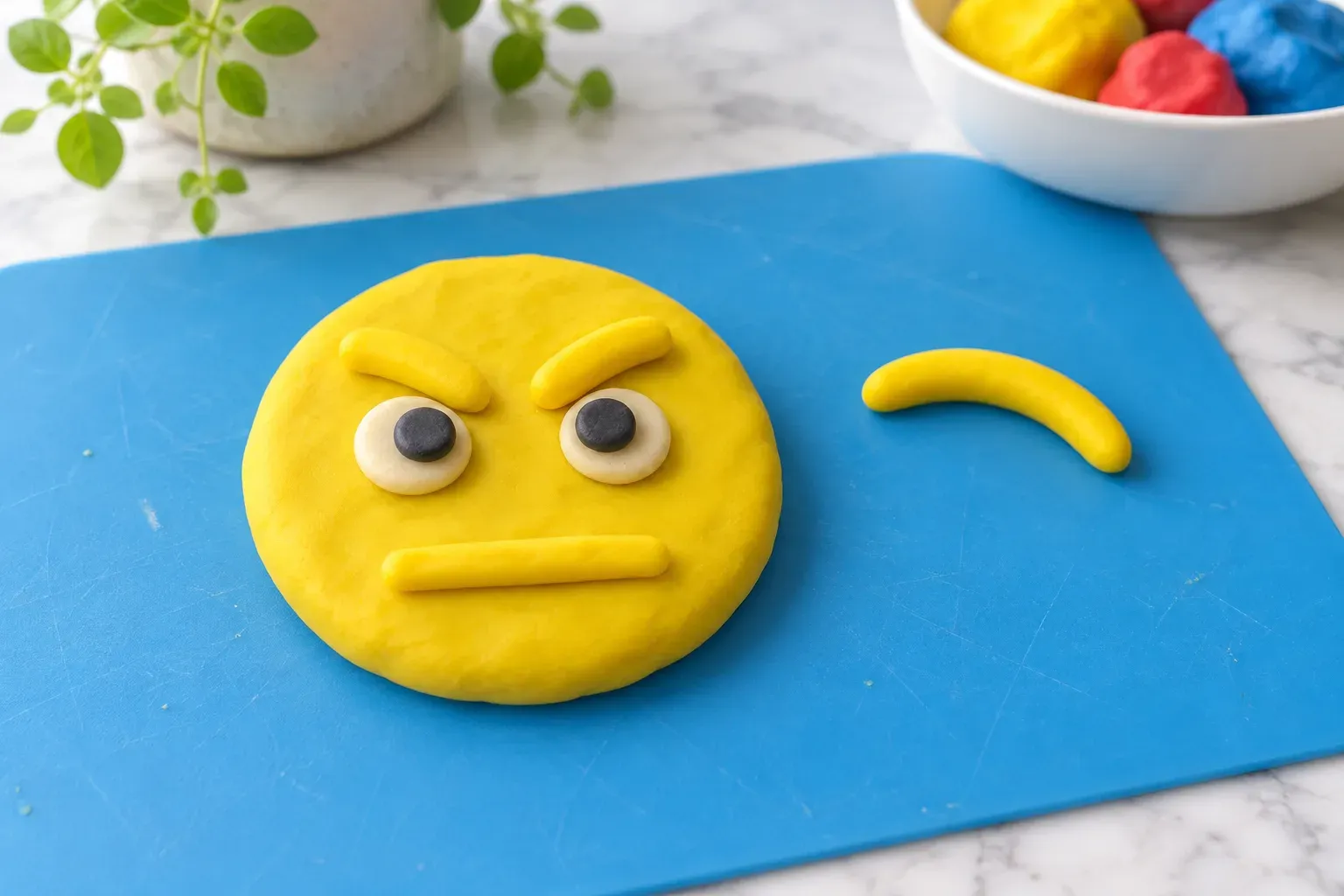
Changing the brows alone shifts the whole feeling
What you need
- play dough
- mat
Don't have it?
- No play dough? Draw a blank face on paper and use strips of paper or bits of string for the brows and mouth.
- No mat? A baking tray or a wipe-clean chopping board keeps the dough off the table.
What they are practising
- fine motor. Rolling tiny balls for eyes and thin sausages for brows takes light, controlled pressure from fingertips and palms.
- creativity. Deciding how a surprised mouth differs from a sad one and shaping it is your child's own design.
- language. Naming each feeling and talking about what causes it gives your child words for cross, worried and proud.
Make it easier
Stick to happy and sad for a three-year-old, and make the round face for them so they only have to add a mouth. Pull the same face yourself as a clue.
Make it harder
Ask an older child for trickier feelings such as nervous, proud or disappointed, then guess each other's faces. They can tell a short story about why the face feels that way.
Parents ask
- My child only ever wants to make angry faces. Should I worry?
- No. Cross faces are fun to make and safe to play with. Join in, ask what the face is cross about, and offer a different feeling later.
- How do I bring up real feelings without it getting heavy?
- Keep it about the dough: what might have happened to this one. Children often volunteer their own story once the face has one.
- The dough is drying out. Can it be saved?
- Knead in a few drops of water and it usually softens. Keep it in an airtight tub or bag between uses.