Art
Paper bag puppets
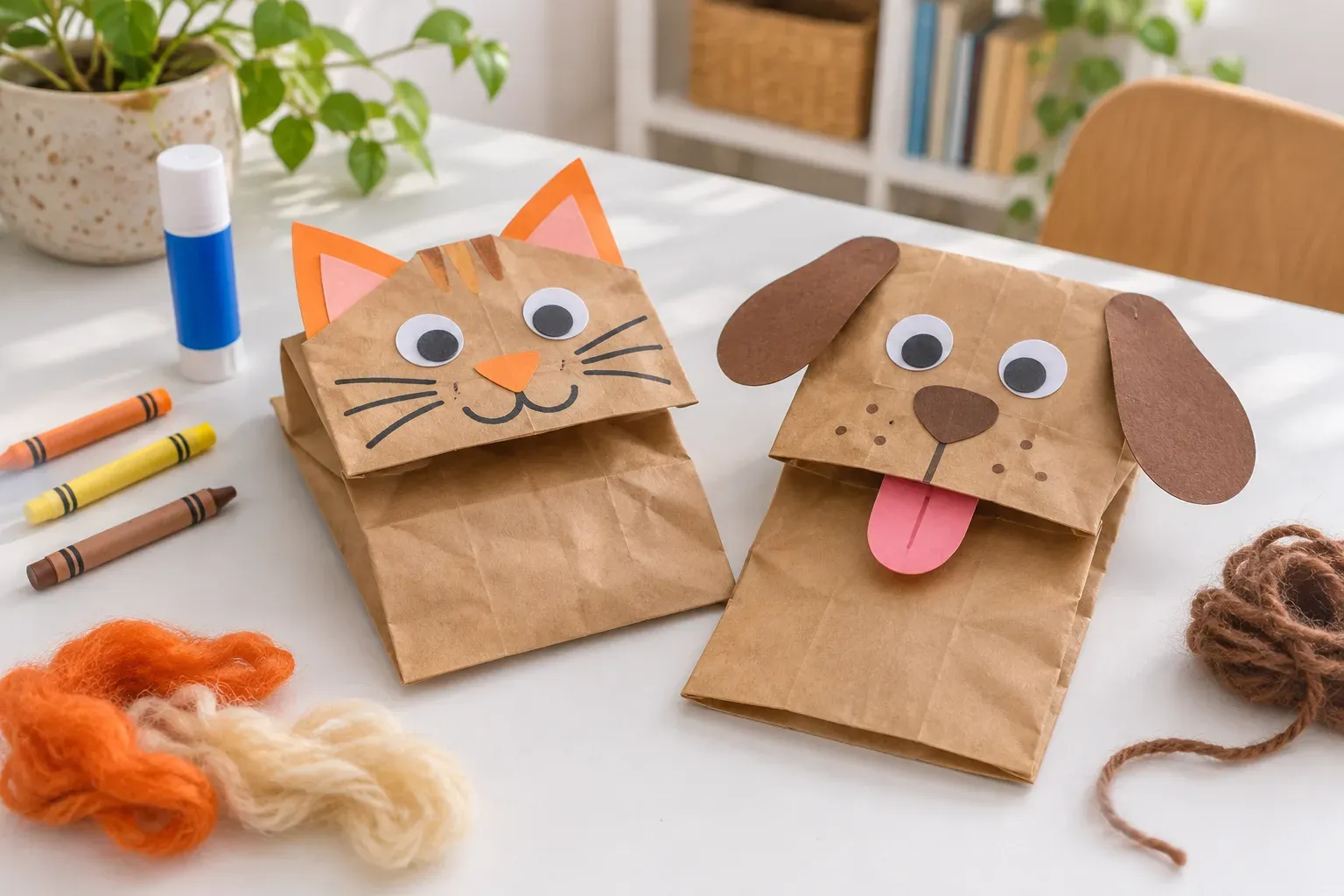
Turn a flat-bottomed paper bag into a talking puppet by drawing a face on the folded base and adding paper ears.
- Age
- 3 to 6 years
- Play time
- 30 min
- Set-up
- 5 min prep
- Where
- Indoors
- Who
- Any number of kids
- Clean-up
- Low mess
A brown paper lunch bag folded flat already has a mouth, which is why these have been a classroom favourite for decades. Children who are reluctant to talk often chat quite happily through a puppet, and the voices they choose are usually hilarious. The making takes half an hour; the shows that follow can take the rest of the afternoon. Glue sticks beat runny glue here, because wet paper bags wrinkle.
Wool is yarn in the US, where these bags are often sold as paper lunch sacks.
How to play
-
Lay a paper bag flat with the folded base facing up and towards you. This flap is the top of the head, and the crease underneath it is the mouth.
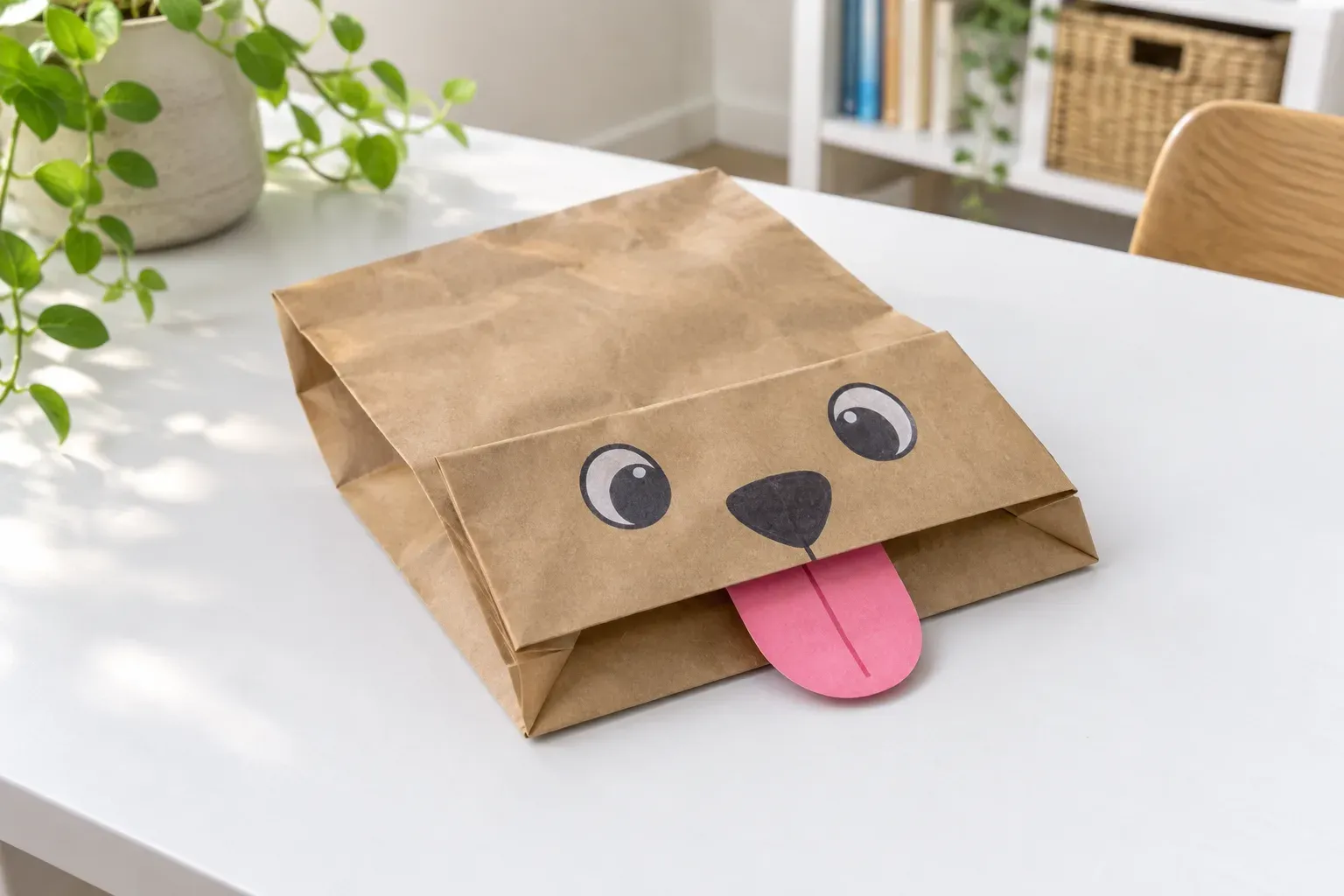
The folded base becomes the head and mouth -
Help your child draw eyes and a nose on the flap, and a tongue or teeth just under it so they show when the mouth opens.
-
Cut ears, hair, whiskers or a beak from coloured paper, or snip short lengths of wool, and glue them on.
-
Show them how to slip a hand inside with their fingers in the flap, then open and close it to make the puppet talk.
-
Make two and start a conversation between them, or crouch behind the sofa and put on a show.
What you need
- flat-bottomed paper bags
- crayons or felt pens
- coloured paper
- child scissors
- glue stick
- wool scraps
Don't have it?
- No paper bags? A clean old sock with eyes drawn on in felt pen makes a fine puppet too.
- No wool? Strips of crepe or tissue paper make good hair.
What they are practising
- creativity. Deciding who the puppet is, what it looks like and how it sounds is all up to them.
- language. Putting on a voice and chatting through the puppet invites made-up conversations they might not try as themselves.
- fine motor. Snipping paper ears and working the mouth flap open and shut both take small, controlled movements.
Make it easier
For a three-year-old, cut out ears and eyes in advance and let them choose and stick. They can scribble on the rest.
Make it harder
Older children can make a pair of characters for a short story, such as a cat and a mouse, and perform it from start to finish.
Parents ask
- Our bags have no flat bottom. Will they still work?
- Not as talking puppets, since the mouth comes from the folded base. Draw a face on one side and use it as a simple glove puppet instead.
- How do I get a shy child to join in?
- Talk to the puppet rather than to your child. Ask it questions, and many children answer in the puppet's voice before they realise they are doing it.
- Do they last?
- A few days of hard use. Keep them in a shoebox and expect ears to fall off and need sticking back on.
Find more like this
3 year olds4 year olds5 year oldsIndoorsLow messArtWith paper