Art
Grated chalk pavement paint
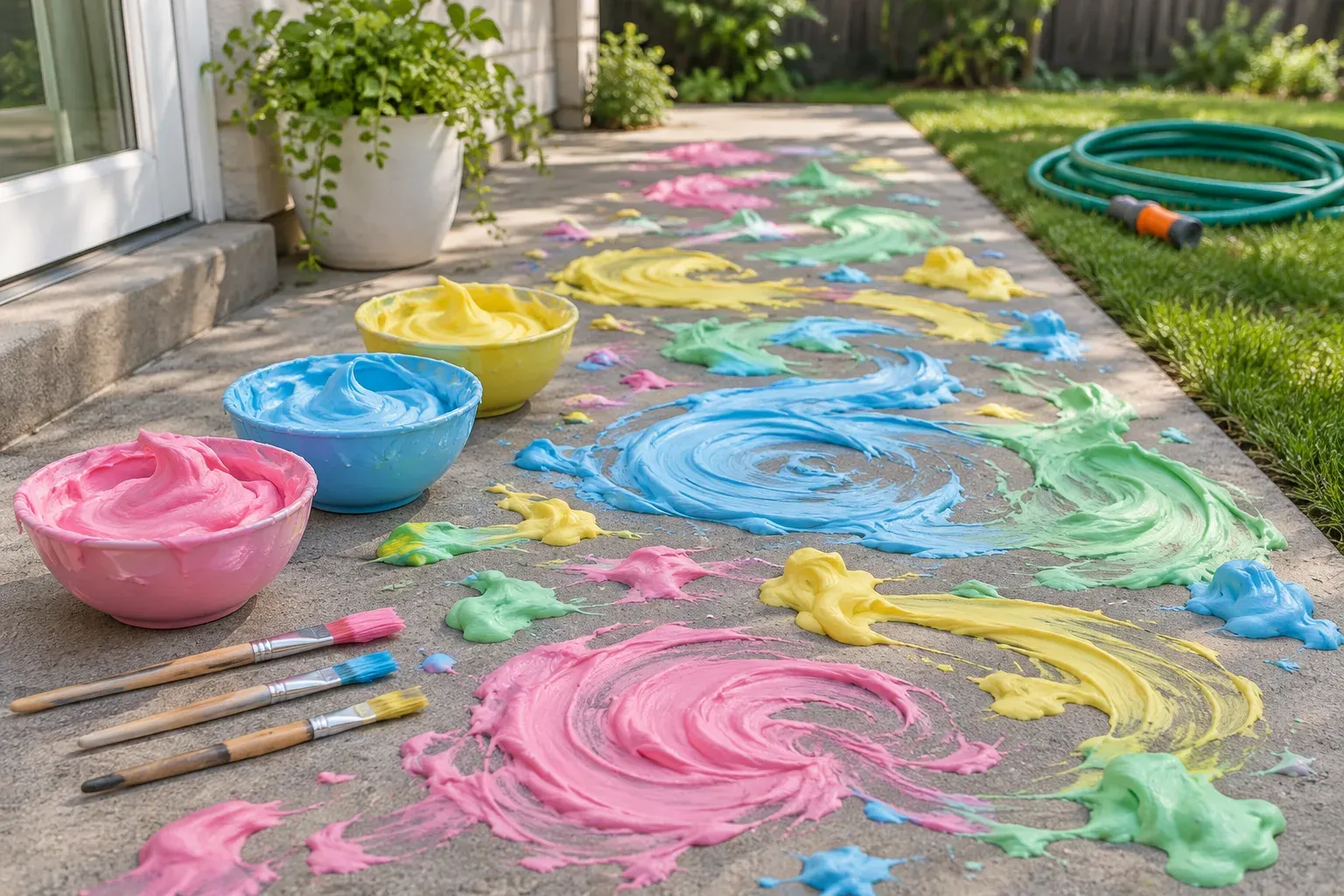
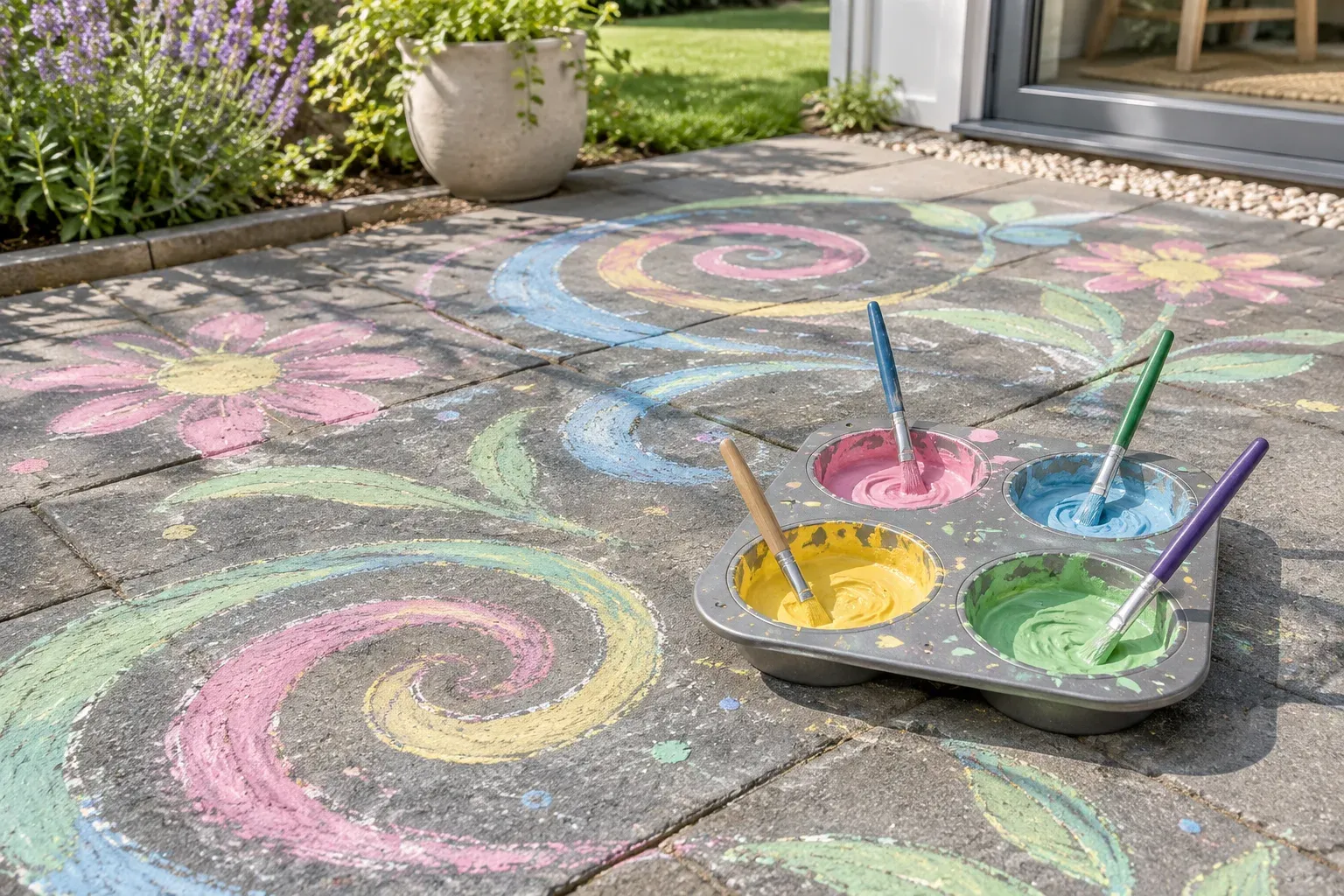
Grate chalk into cups, stir in water to make a paste, then paint paving stones and rinse them clean.
- Age
- 2.5 to 6 years
- Play time
- 30 min
- Set-up
- 10 min prep
- Where
- Outdoors
- Who
- Any number of kids
- Clean-up
- Medium mess
The broken stubs at the bottom of the chalk bucket are what you want here. Grated and stirred with water they make a thick, milky paint that goes on pale and dries surprisingly bright, which children find slightly magical. Take it out on a dry, still day and half an hour disappears easily. The grating is your job and it is dusty, and your patio will look like a festival until you hose it or it rains.
In the US this is sidewalk chalk paint, made from sidewalk chalk.
How to play
-
Choose three or four chalk colours. An adult grates each one on the fine side of the grater into its own cup or muffin tin hole, a tablespoon or two of powder per colour.
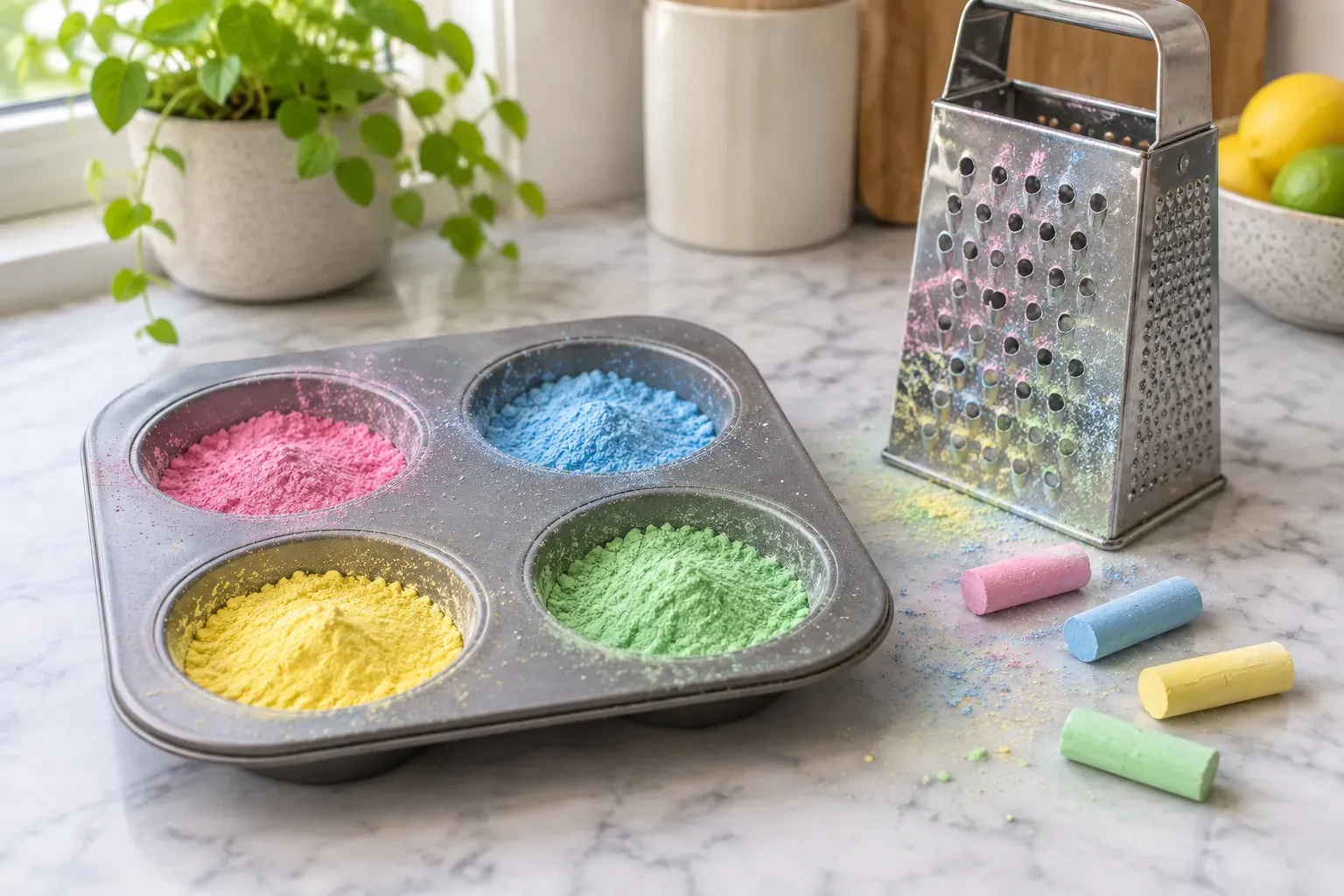
Keep each colour in its own hole so it stays bright -
Stir in water a few drops at a time until each colour is a thick paste, about as runny as yoghurt.
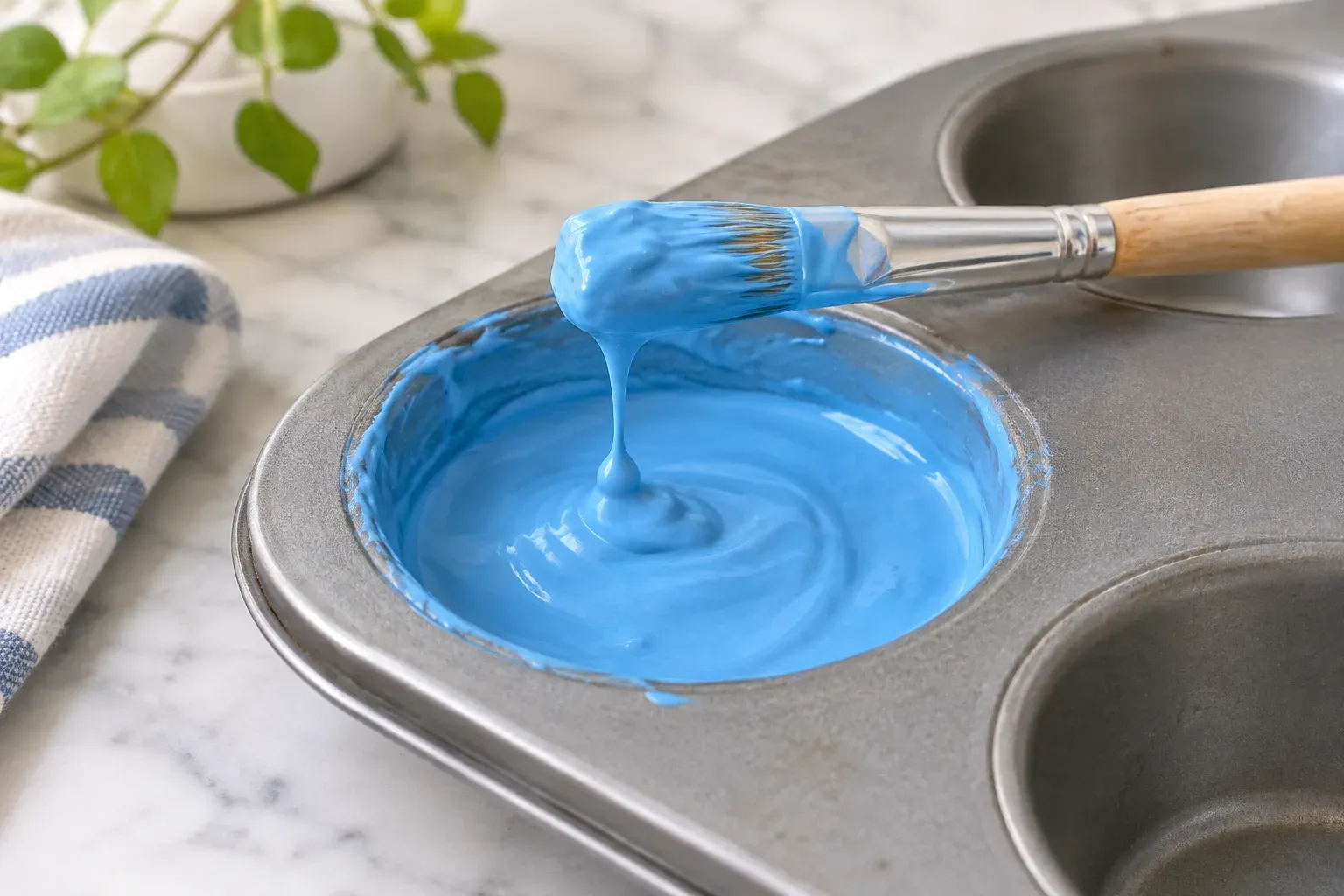
Smooth and thick, so it clings to the brush -
Carry the paints outside and put a brush in each colour.
-
Let your child paint paving stones, a wall or a fence. The colours look pale when wet and brighten as they dry.
-
Add a little more water if the paste starts to dry out in the cups.
-
When you have finished, rinse the paving clean with water and wash the grater.
What you need
- pavement chalk
- grater
- water
- muffin tin or cups
- brushes
Don't have it?
- No pavement chalk? Ordinary blackboard chalk works, though the sticks are thinner and take longer to grate.
- No brushes? Clean sponges or an old washing-up brush spread the paste well.
- No muffin tin? Yoghurt pots or jam jar lids hold a colour each.
Stay close
An adult should do or closely supervise the grating.
What they are practising
- creativity. Your child chooses what to paint on a surface far bigger than any sheet of paper.
- fine motor. Loading a brush with thick paste and stroking it over rough stone takes grip and wrist control.
- colours. They name the colours in the cups and see each one change from pale when wet to bright when dry.
Make it easier
Mix two colours only and give the youngest a wide brush and one paving stone to cover however they like.
Make it harder
Suggest a six-year-old paints a hopscotch grid, a road for bikes or their name in letters as tall as they are, and mixes new shades in spare cups.
Parents ask
- Can my child do the grating?
- Graters and small knuckles do not mix, so this part is for an adult. Do it beforehand, or let your child watch from beside you and do the stirring.
- Does it wash off properly?
- Off paving and most fences, yes, with a hose or a bucket and stiff brush. Test a hidden patch first on pale or porous stone and on painted surfaces, where strong colours can linger.
- What about the chalk dust?
- Grate outdoors or over a damp tray and try not to breathe it in. Once water is stirred in there is no dust. Wash the grater well before it goes back to cheese duty.
Find more like this
2 year olds3 year olds4 year olds5 year oldsOutdoorsArtWith chalkWith cups