Sensory
Giant bubbles
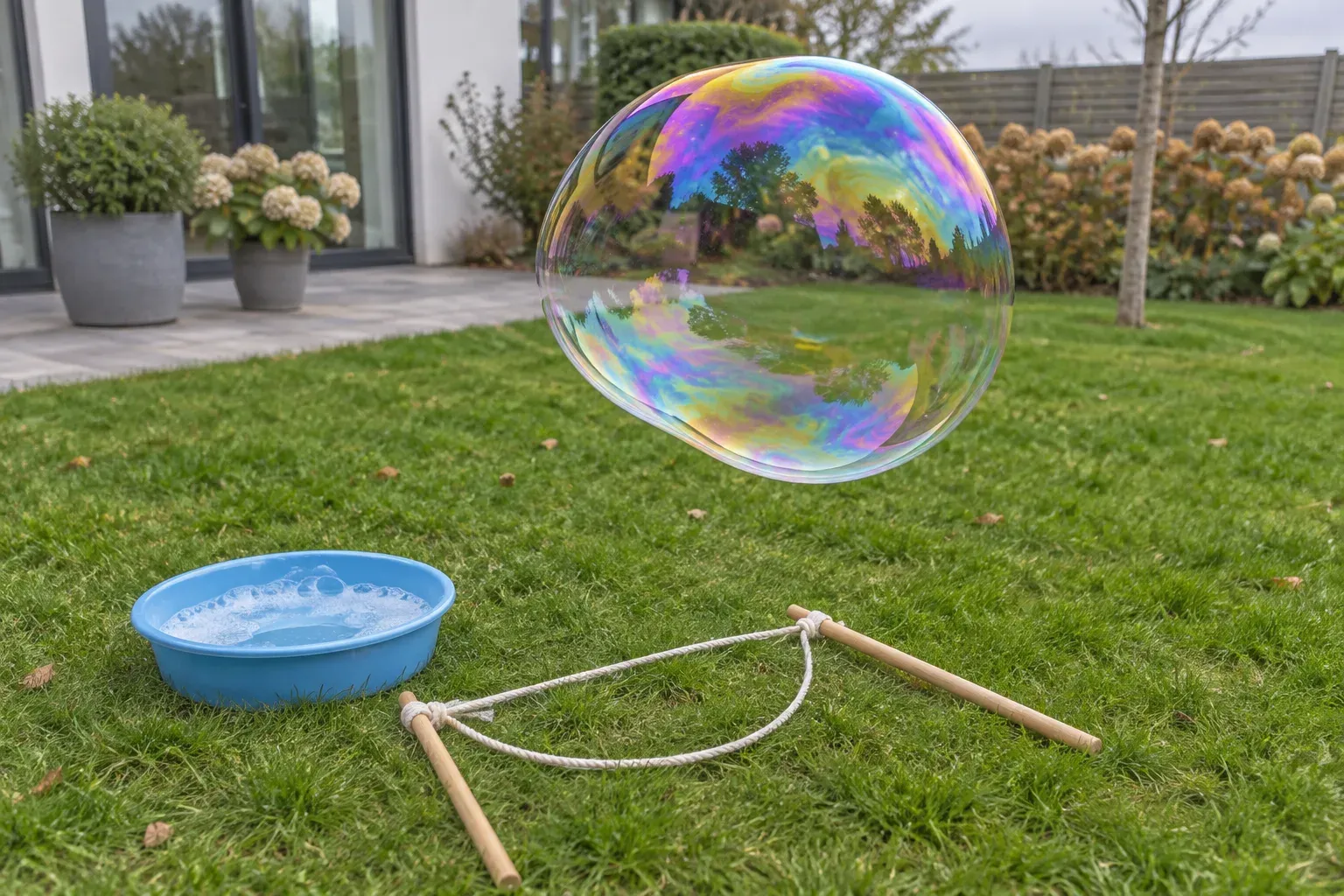
Mix a strong bubble solution, dip a two-stick string wand, and walk slowly backwards to draw out enormous wobbling bubbles.
- Age
- 3 to 6 years
- Play time
- 30 min
- Set-up
- 10 min prep
- Where
- Outdoors
- Who
- Any number of kids
- Clean-up
- Medium mess
A bubble big enough to swallow a dog makes even the neighbours stop and watch. The trick is patience: the mixture improves after a rest, and the wand has to move slowly or the bubble breaks. Choose a calm, damp day, ideally just after rain, because hot wind pops everything. Three-year-olds mostly chase and clap; by five, most can pull a decent bubble out on their own.
Washing-up liquid is dish soap in the US.
How to play
-
In a bucket, mix about 1 litre of water with half a cup of washing-up liquid and a tablespoon of glycerine. Stir slowly so it does not foam, and leave it to rest for an hour if you can.
-
For the wand, tie a 1 metre length of cotton string between the tips of two sticks, then tie a 70 cm length between the same two tips, so the longer string hangs below in a loop.
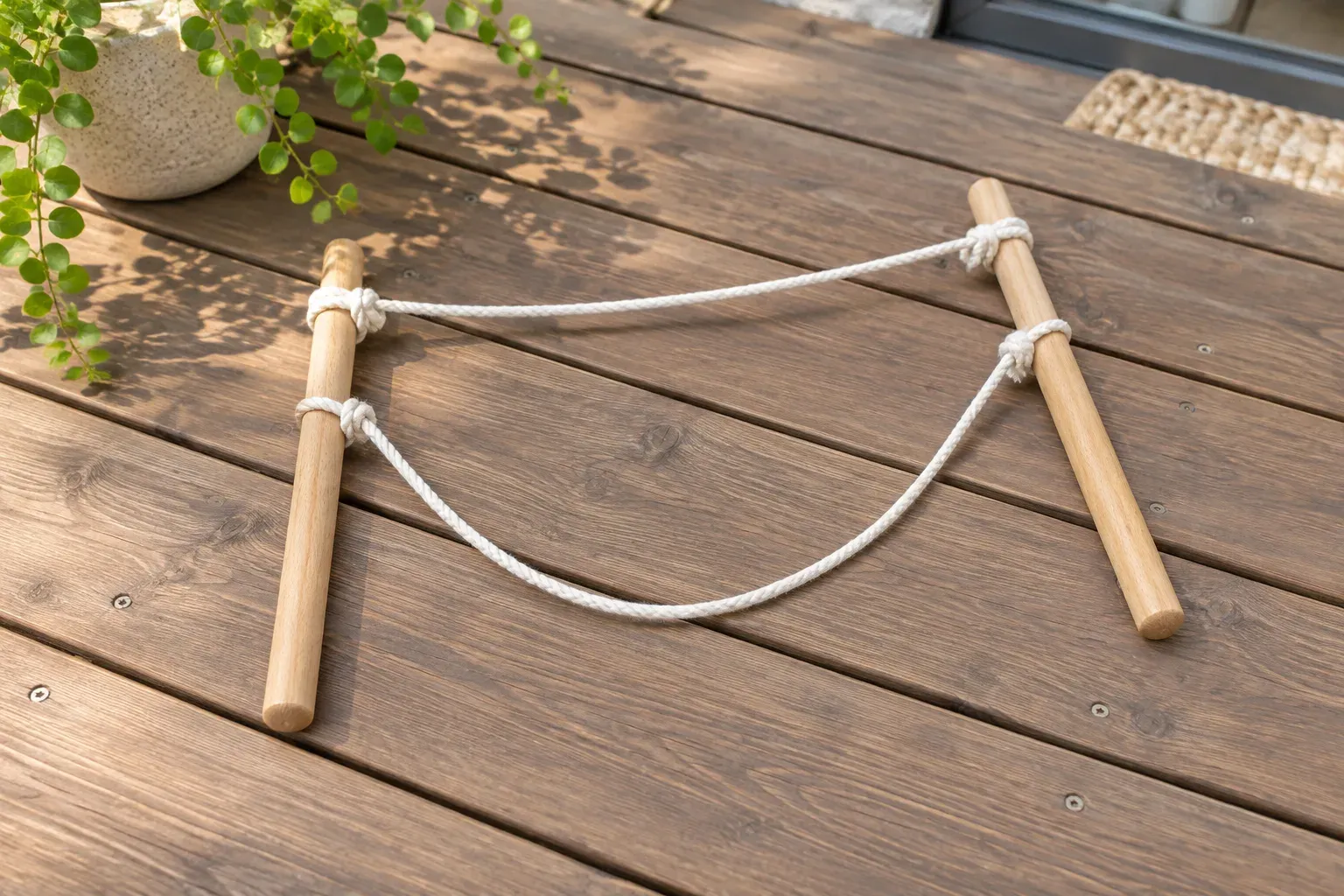
Tie both strings to the same two tips, one longer -
Pour a few centimetres of the mixture into a shallow tub on the grass.
-
Hold the sticks together, dip the strings until soaked, then lift them out and slowly draw the sticks apart to open the loop.
-
Walk backwards slowly, or let the breeze blow through the loop, then bring the sticks together to close the bubble off. Hand the wand over and chase the bubbles while your child tries.
-
Once they have the knack, try for the longest bubble, or one that drifts over the fence before it pops.
What you need
- water
- washing-up liquid
- glycerine
- bucket
- measuring cup and tablespoon
- shallow tub or roasting tin
- two sticks about 40 cm long, such as dowels
- cotton string
- scissors
Don't have it?
- No glycerine? A tablespoon of sugar dissolved in the water helps bubbles last.
- No dowels? Two wooden spoons or two straight, smooth sticks from the garden make a fine wand.
Stay close
Soapy mix stings eyes and makes paving slippery, so play on grass and blow away from faces. Keep the tub shallow and supervised, and empty it when you finish.
What they are practising
- gross motor. Walking backwards smoothly with two sticks held apart, then chasing bubbles across the grass, uses the whole body.
- problem solving. They work out that slow, steady movement and soaked strings beat fast waving.
- sensory exploration. The slippery mix, the swirl of colour on a bubble's skin and the soft pop are all there to notice.
Make it easier
For a three-year-old, make the bubbles yourself and let them chase and pop, or give them a plastic cup with the base cut off by you to dip and wave.
Make it harder
A six-year-old can test changes to the recipe, such as more water or a spoon of sugar, and find out which mix makes the longest bubble.
Parents ask
- Why do my bubbles pop straight away?
- Usually it is too windy, too hot, or the strings are not soaked. Dip for longer, move more slowly, and try again in the evening or after rain.
- Can I keep the leftover mixture?
- Yes. Put a lid on it and store it out of reach for up to a week. It often works better on the second day.
- Will it harm the lawn?
- A splash of soapy mix on grass is fine. Pour leftovers over a patch of lawn or gravel rather than a vegetable bed.