Art
Crayon scratch art
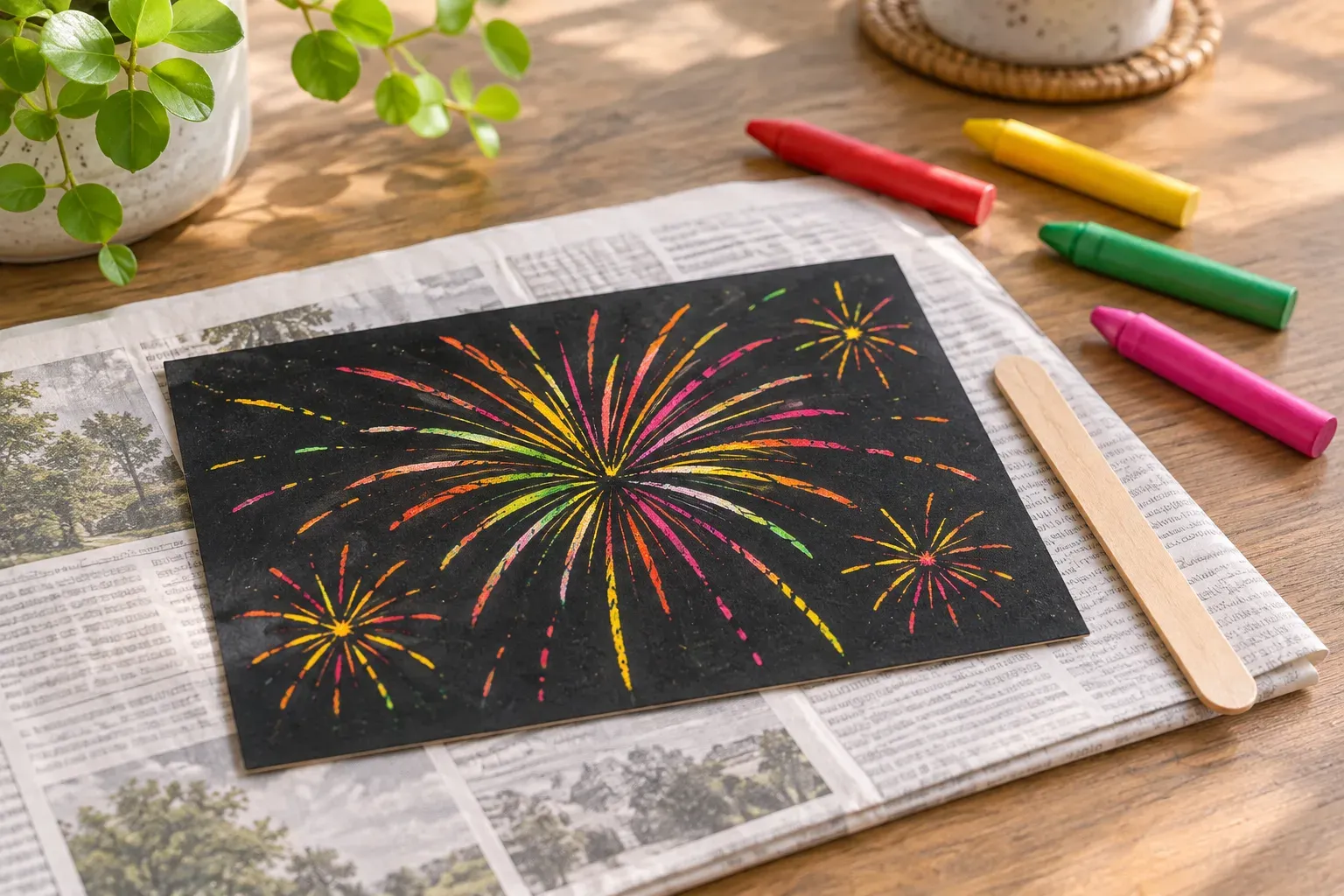
Cover card in bright crayon, paint over it in black, then scratch lines that reveal the colours underneath.
- Age
- 4 to 6 years
- Play time
- 40 min
- Set-up
- 5 min prep
- Where
- Indoors
- Who
- Any number of kids
- Clean-up
- Medium mess
The colouring at the start is real effort, because the crayon has to be thick and cover the whole card, and some children run out of steam before the black even goes on. Split it across a morning and an afternoon if needed. The payoff is worth the wait. The first scratch through the black reveals a streak of orange or pink, and almost every child gasps. Small cards are kinder than big ones for this.
Also known as scratchboard or crayon etching; washing-up liquid is dish soap and lolly sticks are popsicle or craft sticks in the US.
How to play
-
Cover the table with newspaper and give your child a piece of thick white card about postcard size or a little bigger.
-
Ask them to colour the whole card in patches of bright crayon, pressing hard so no white shows. Leave out black, brown and dark blue.
-
Mix about two tablespoons of black poster paint with a few drops of washing-up liquid in a small bowl, which helps it grip the wax, and brush it over the crayon in an even coat.
-
Let it dry completely, at least an hour, and add a second thin coat if colour still shows through.
-
Hand them a wooden lolly stick and show them how scratching with the edge or a corner lifts the black away to reveal the rainbow underneath.
-
Start with patterns such as zigzags and spirals, then try a picture such as fireworks or a night garden.
What you need
- thick white card
- wax crayons
- black poster paint
- washing-up liquid
- small bowl
- wide paintbrush
- wooden lolly sticks
- newspaper
Don't have it?
- No black paint? Press hard with a black crayon over the bright layer for a waxier version that still scratches.
- No lolly sticks? The end of a plastic teaspoon handle scratches nicely.
Stay close
Use non-toxic paint, and stick to blunt scratching tools such as lolly sticks; pins and skewers are not needed.
What they are practising
- fine motor. Pressing crayon hard enough to cover the card, then scratching thin lines with control, both need a firm grip.
- creativity. A black card that turns bright wherever they scratch invites pictures of fireworks, stars and night skies.
Make it easier
For a four-year-old, colour the card yourself in thick stripes while they help, so their energy goes into the scratching.
Make it harder
A six-year-old can plan where colours sit underneath, such as a yellow patch for the moon, and scratch a picture to match.
Parents ask
- The black paint keeps beading on the crayon. What now?
- Stir a few more drops of washing-up liquid into the paint. Dabbing the first layer on, then brushing once it starts to grip, also helps.
- Where do all the black flakes go?
- Everywhere nearby, which is why the newspaper matters. Fold it up and tip it in the bin straight afterwards, before flakes get trodden into the carpet.
- Can I prepare the cards the day before?
- Yes, and it often works better. Colour and paint one day, then scratch the next when the black is fully dry.